


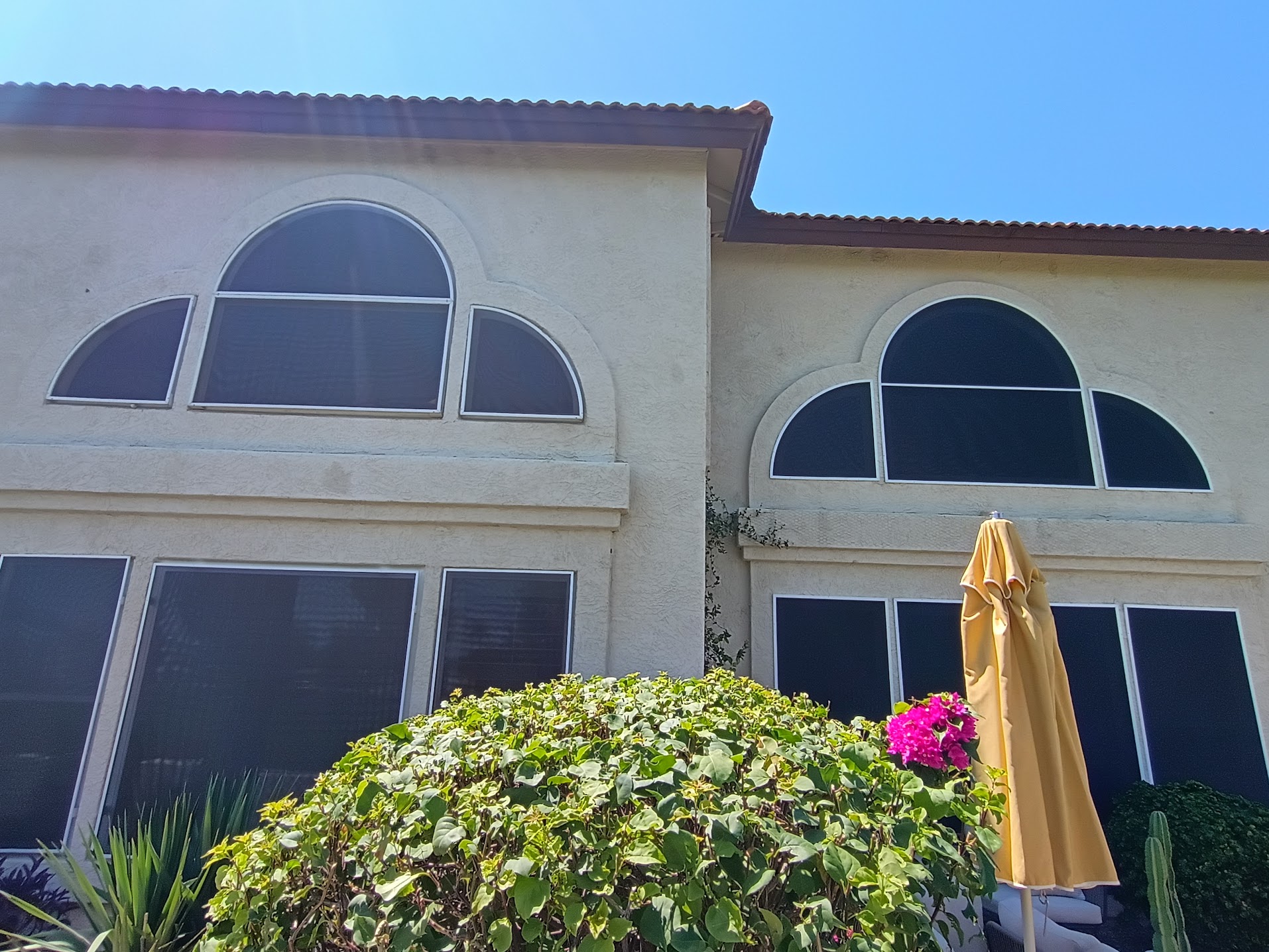
The most effective window treatments to reduce heat in a hot climate are the ones that stop sunlight before it turns into indoor heat. Exterior sun screens, awnings, and exterior roller shades lead on raw performance, while low-openness solar fabrics, reflective glass film, and tight-fitting cellular shades handle whatever reaches the glass. The right choice depends on which way your windows face, how much of the view you want to keep, and whether the problem is one scorching room or the whole house.
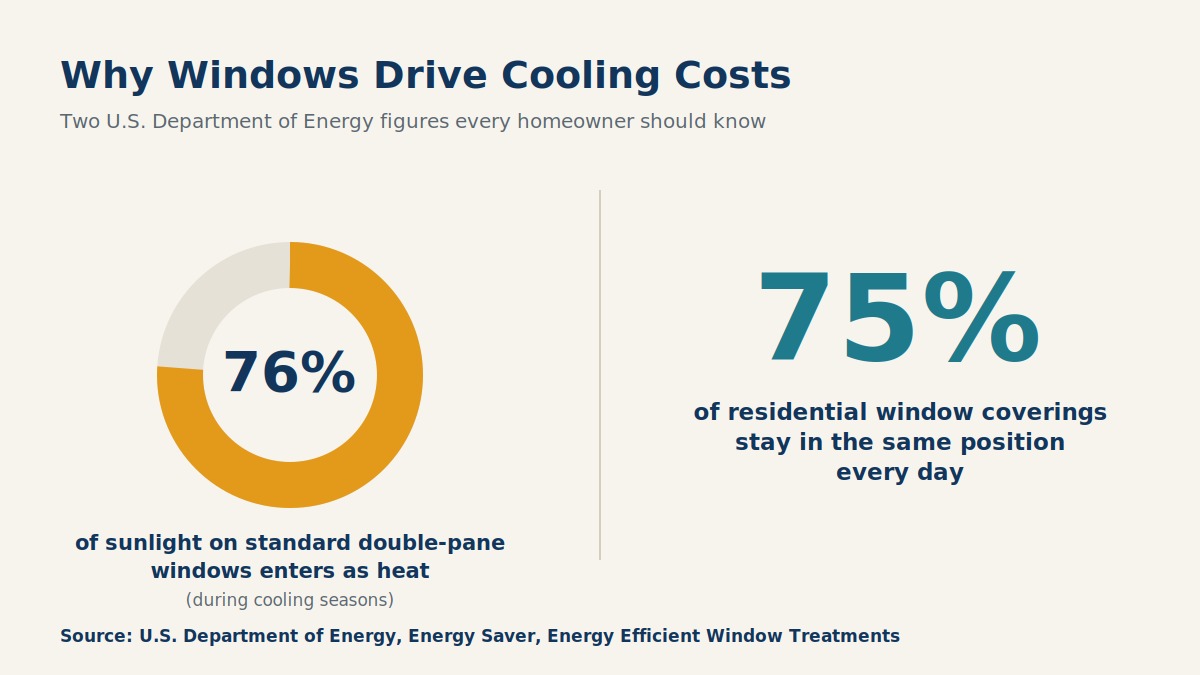
According to the U.S. Department of Energy, about 76% of the sunlight that falls on standard double-pane windows enters the home as heat during cooling seasons. That is why a living room with a west-facing wall of glass can feel noticeably warmer than the rest of the house by mid-afternoon, even while the air conditioner runs nonstop.
Why Windows Let So Much Heat Into Hot-Climate Homes
Glass lets in visible light, but it also lets in infrared energy. Once sunlight passes through a window, it is absorbed by floors, walls, and furniture and released as heat that stays trapped in the room. Large picture windows, sliding glass doors, and west or south exposures make the effect much stronger. Even energy-efficient glass still admits a large share of solar heat, which is why the covering you add matters so much.
Unwanted heat reaches a room in three ways:
- Solar radiation from direct sunlight, usually the largest source in sunny desert conditions
- Conduction through the glass and frame
- Air leakage around older or poorly sealed window assemblies
Because solar radiation dominates, the best-performing products are the ones designed to reflect, filter, or block sunlight before it becomes heat. They also protect flooring, artwork, and furniture from fading caused by ultraviolet exposure.
Which Window Coverings Block the Most Heat? A Quick Comparison
| Option | Where it mounts | How it reduces heat | Best fit | Trade-off |
|---|---|---|---|---|
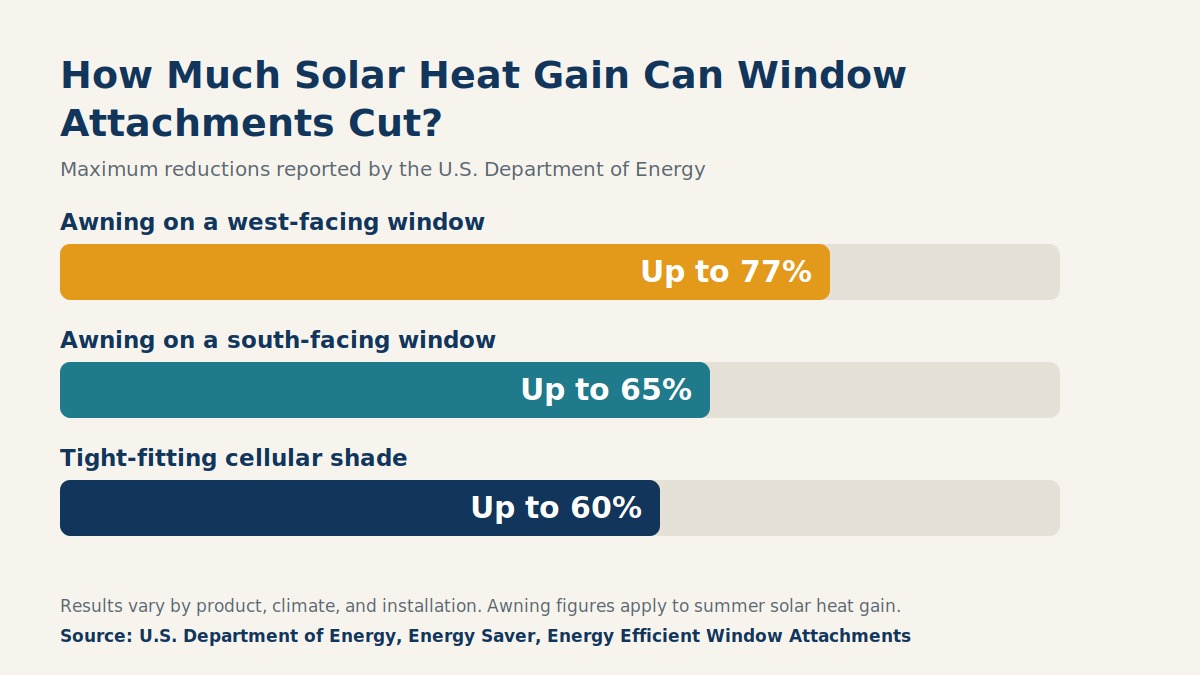
| Exterior sun screens and awnings | Outside the glass | Intercept sunlight before it reaches the window; DOE reports awnings cut summer solar heat gain by up to 65% (south) and 77% (west) | West and south glass, patio doors, large openings | Fixed styles can reduce winter solar warmth; awnings need ventilation |
| Exterior roller shades | Outside the glass | Block sun at the outer layer and can be raised or lowered | Wide glass and sliding doors | Usually best with motorized operation for daily use |
| Low-openness solar shades | Inside the room | Filter sunlight, cut glare and UV, keep an outward view | Living areas, kitchens, home offices | Heat has already reached the glass |
| Solar control window film | On the glass | Lowers solar heat gain, glare, and UV across the full pane | East and west glass, windows hard to cover | Must be matched to your glass and warranty |
| Cellular shades | Inside, fitted tightly | Honeycomb pockets trap air; DOE reports up to 60% less unwanted solar heat | Bedrooms and rooms that need darkness | Little to no outward view |
| Blinds and shutters | Inside the room | Adjustable slats reflect and redirect sunlight | Privacy and light control | Weaker heat blocking than exterior shading |
Exterior Shading Stops Heat Before It Reaches the Glass
The Department of Energy describes exterior shutters and shades as the most effective way to reduce solar heat gain, and it recommends exterior shading whenever possible. The logic is simple. Once the sun heats the glass itself, some of that energy is already on its way indoors. An exterior layer intercepts the sunlight one step earlier. For homes with large exposed glass, we usually start with exterior sun screens and patio-style shading before looking at anything inside the room.
Exterior solutions are especially useful for:
- Homes with large exposed windows and sliding glass doors
- Rooms that stay hotter than the rest of the house
- South-facing and west-facing elevations
- Homeowners who want strong daytime heat control without heavy interior coverings
Sun Screens, Awnings, and Exterior Roller Shades Compared
Sun screens are fabric panels mounted over the window that look like heavy-duty insect screening. They cut solar heat, glare, and UV while still letting you see out, depending on the density and color you choose. Awnings shade a window or an entire elevation from above, and the Department of Energy advises choosing a tightly woven, opaque fabric in a light color because light colors reflect more sunlight. Exterior roller shades combine the benefits of both and can be motorized, which makes them easy to run every day.
One design detail matters in any exterior product: openness. The Department of Energy notes that larger openings in the fabric allow more solar gain, so a tighter weave protects better while a more open weave keeps more of the view.
Why West-Facing Windows Benefit the Most
Afternoon sun arrives at a low angle on west-facing glass, right when outdoor temperatures peak. The Department of Energy found awnings can reduce solar heat gain by up to 77% on west-facing windows compared with up to 65% on south-facing ones. If only one elevation of your home gets exterior shading, make it the west side.
Interior and Glass-Applied Options for Heat and Glare
Exterior mounting is not always possible. Homeowners associations, upper-story windows, and architectural details can all limit what goes on the outside of a home. In those cases, interior coverings and film still deliver meaningful results, especially when chosen for performance instead of appearance alone.
Interior Window Treatments to Reduce Heat Without Losing Your View
Low-openness solar-control roller fabrics are the strongest interior choice when you want to keep a view. The openness factor is the percentage of the fabric that is open weave. A 1% fabric blocks more heat and glare than a 5% or 10% fabric, which is why the fabric matters more than the style of the shade. Lighter fabrics reflect more sunlight, while darker fabrics tend to preserve the outward view better and cut glare.
Solar shades suit:
- Living rooms, kitchens, and open-concept spaces with desert views
- Rooms with TVs and screens that suffer from glare
- Homes that want UV protection for flooring and furnishings
They sit inside the glass, so they do not stop heat as completely as an exterior product. That is the main reason we often pair them with exterior shading on the hottest elevations. Operation is flexible, with roller-style window coverings available in manual and motorized versions to suit each room.
Window Film for Full-Pane Heat and UV Control
Window film is applied directly to the glass, so it works across the whole pane and never needs to be raised or lowered. The Department of Energy notes that film helps block solar heat gain, glare, and ultraviolet exposure, and that it is best suited to climates with long cooling seasons. Silver or mirror-like films are typically more effective than lightly tinted ones, and newer solar control films with a neutral look can block near-infrared radiation without a dark appearance. East-facing and west-facing windows gain the most from film, while north-facing windows will not benefit.
Film needs one important precaution. Tinted films that absorb solar energy can stress the seals of insulated glass units, and many window manufacturers void their warranties when film is added. That makes professional selection worthwhile, and it is why any heat-rejecting film for glass should be matched to the glass in your home before installation.
Cellular Shades for Bedrooms and Insulation
Cellular shades trap air in honeycomb pockets, which slows heat transfer through the window. The Department of Energy reports that tight-fitting cellular shades can reduce unwanted solar heat gain by up to 60% in cooling seasons. Fit is the key detail, so a shade that sits close to the glass with minimal gaps performs better than a loose one. They give up the outward view, which is why they fit bedrooms, nurseries, and media rooms better than main living areas.
Shutters and Blinds: Strong on Control, Moderate on Heat
Adjustable slats let you redirect light, balance privacy, and reflect sunlight when fully closed. The Department of Energy notes that highly reflective blinds can reduce heat gain when completely closed and lowered on a sunny window. Tight-fitting plantation shutters add durability and privacy. Because they sit inside the room, though, they are not true solar rejection systems. Browse our interior blinds and plantation-style shutters when privacy and light control matter as much as temperature.
Best Window Treatments to Reduce Heat by Window Exposure
A single product rarely works equally well across a whole house. Matching the treatment to the way each window faces gives you the most cooling for the money, and our custom window coverings for every room cover the full range of options for each situation.
| Window exposure | Sun pattern | Strongest options | Notes |
|---|---|---|---|
| West-facing | Intense, low-angle afternoon sun | Exterior sun screens, awnings, exterior roller shades; film or low-openness solar shades as a second layer | The hardest exposure to manage; prioritize it first |
| South-facing | High sun through the middle of the day | Awnings, exterior screens, solar shades | Film helps somewhat, though winter solar warmth is reduced |
| East-facing | Strong morning sun | Window film, solar shades, cellular shades in bedrooms | Film performs well on east and west glass |
| North-facing | Little direct sun | Light-filtering fabrics for glare only | Film does not pay off here |
| Sliding doors and large picture windows | Large glass area, heavy exposure | Exterior roller shades or sun screens, with a solar shade inside | Big openings multiply heat gain |
Homeowners comparing broader strategies can also review our guidance on treatments suited to Arizona homes, which accounts for the desert sun conditions that shape these choices.
Fabric and Material Details That Matter More Than Style
A decorative woven shade may look great, but if it lets too much solar energy through, it will do little for comfort. Compare these performance factors before you choose:
- Openness factor for solar shades and sun screens
- Fabric color, since lighter colors reflect more sunlight
- Tight fit, with minimal gaps around the edges of the shade
- Solar Heat Gain Coefficient (SHGC) and Visible Transmittance (VT) on window film, where a lower SHGC blocks more heat and a higher VT lets in more daylight
- Attachments Energy Rating Council (AERC) certification, which the Department of Energy recommends for verified energy performance
- Exterior-grade durability for anything mounted outdoors
Layering and Automation Make Every Option Work Harder
The strongest results usually come from combining products. Exterior screens stop sun before it reaches the glass, film improves the glass itself, and interior shades manage glare, privacy, and visibility. Pacific Northwest National Laboratory notes that interior and exterior attachments each have a role, and that adjustable products let occupants balance heat gain, daylight, and view.
Operation matters just as much as product choice. The Department of Energy found that 75% of residential window coverings stay in the same position every day, which means a high-performance shade does nothing while it sits open during the hottest hours. Motorized systems solve that problem by lowering shades on a schedule or in response to the sun, so the heat protection happens without anyone remembering to do it. Ask about automated shading that follows the sun for the rooms that take the most sun.
How to Choose the Right Heat-Reducing Treatment
A good recommendation looks at more than room type. It accounts for orientation, glass size, how you use the space, and what you want to see from inside. Start with these questions:
- Which rooms get the harshest afternoon sun?
- Do you want to preserve the outdoor view?
- Is privacy a priority in the same rooms?
- Are you trying to cut glare, lower temperatures, or both?
- Would a layered solution make sense on your most problematic windows?
For many Arizona homes, the best answer is a mix: exterior sun screens on the hottest elevations, solar shades in the main living areas, and film on select windows that need extra help. Budget is part of the decision too, and you can review what each option typically costs before deciding where to start.
Frequently Asked Questions About Reducing Heat Through Windows
What window treatments reduce heat the most?
Exterior solutions such as awnings, sun screens, and exterior roller shades reduce the most heat because they block sunlight before it reaches the glass. The U.S. Department of Energy reports that awnings can cut summer solar heat gain by up to 65% on south-facing windows and 77% on west-facing windows. Among interior options, tight-fitting cellular shades, low-openness solar shades, and reflective film perform best.
Are exterior sun screens better than interior shades for blocking heat?
For pure heat rejection, yes. Exterior products intercept sunlight before the glass warms up, while interior products work after the sun has already reached the window. Interior solar shades still make sense when you want adjustable control, a cleaner look, or when exterior mounting is not practical, and the two work well together on the hottest windows.
Does window film really reduce heat in a house?
Yes. Quality solar control film lowers solar heat gain and cuts glare and ultraviolet exposure, and the U.S. Department of Energy notes that films work best in climates with long cooling seasons. East-facing and west-facing windows benefit most. Because some tinted films can stress insulated glass units and affect manufacturer warranties, the film should be matched to your glass.
Are cellular shades good for hot climates?
They can be. The U.S. Department of Energy states that tight-fitting cellular shades can reduce unwanted solar heat gain by up to 60% in cooling seasons. They work especially well in bedrooms, where insulation and darkness matter more than the view. Where you want to keep a view of the outdoors, a solar shade is usually the better fit.
What openness factor is best for heat control?
A lower openness factor means a tighter weave, which blocks more heat and glare. Fabrics at 1% to 5% are common choices for hot, sunny exposures, while 10% keeps more view and daylight with less heat protection. The U.S. Department of Energy notes that greater openness reduces protection from glare and solar heat gain.
Which windows should I cover first?
Start with west-facing glass, then south-facing glass, because those exposures take the strongest afternoon sun. East-facing windows come next, mainly in rooms used during the morning. North-facing windows rarely need more than glare control.
Should I keep window coverings closed during the day in summer?
On windows that receive direct sunlight, yes. The U.S. Department of Energy suggests keeping those coverings closed in summer to reduce heat gain, and opening coverings on windows that do not get direct sun to bring in natural light. Automated shades make that routine much easier to keep up.
Can I combine window film and shades?
Yes. Layering is often the strongest approach on problem windows. Film or exterior screens reduce heat first, then interior shades manage glare, privacy, and comfort. Confirm that the film is compatible with your glass before layering.
Cool Down the Hottest Rooms in Your Home
If harsh sun, overheated rooms, and constant glare are part of your daily routine, the right combination of coverings can change how your home feels. At Colby Window Solutions, we help Arizona homeowners match products to their exposure, glass type, and lifestyle, whether that means exterior shading, film, solar shades, or a layered plan.
To get a recommendation that fits your home, you can talk through your windows with our team and compare the options that make the most sense for your sun exposure and comfort goals.