


Custom Window Film
Some homeowners search for window film, while others call it window tinting or home window tinting. All three point at the same fix: a thin layer applied directly to existing glass that cuts glare, adds privacy, and blocks the sun before it turns a room into a problem. At Colby Window Solutions, we install film for homes and businesses that want better-performing glass without replacing a single window.
It’s one of the few upgrades that solves several problems at once: too much visibility, too much heat, fading floors and furniture, and screens that are impossible to see in direct sun. Because it works on the glass itself, there’s no bulk added to the window and no interior treatment competing for space.

Window Film and Window Tinting Are the Same Idea
These terms get used almost interchangeably, and for good reason: they’re the same thing installed the same way. “Window tinting” tends to be the term homeowners reach for first, especially when the goal is privacy or a darker look. “Window film” is the broader industry term that also covers clear, low-visibility options built purely for heat and UV control with almost no tint at all.
Whichever term you use, the questions are the same: how much heat do you want blocked, how much privacy do you need, and how much visible tint are you comfortable with. We help you answer all three before recommending anything.
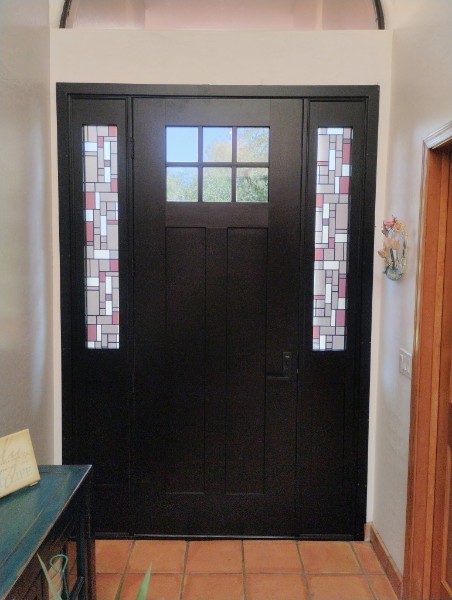
Home Window Tinting for Living Spaces, Bathrooms, and Entryways
For homes, film is usually chosen for one of three reasons: too much visibility from the street, too much glare on a TV or a work screen, or too much heat coming through a west-facing wall of glass. Entryways, bathrooms, bedrooms, and living rooms are the most common starting points.
- Glare reduction for screens and bright living spaces
- Privacy for street-facing or exposed windows
- Protection for flooring, furniture, and artwork from sun exposure
- A clean look that doesn’t add bulk to the window
- Decorative options for front doors, sidelights, and bathroom glass
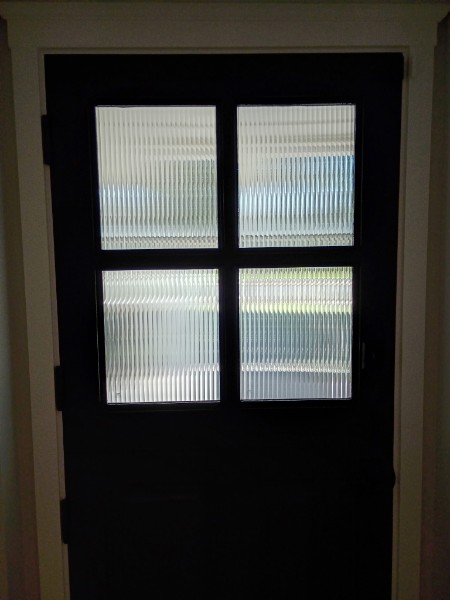
Commercial Window Film for Offices and Storefronts
Businesses have a slightly different list of priorities: comfort for employees, privacy for meeting spaces, and a storefront that doesn’t feel like a fishbowl. Film handles all three without the disruption or cost of replacing glass.
- Reduced glare on workstations and screens
- Privacy for interior offices and conference rooms
- A cleaner, more finished look for storefront and partition glass
- Decorative and branded film options for glass-heavy spaces
- Better comfort for employees and customers in glass-heavy areas
How Much Difference Does Film Actually Make?
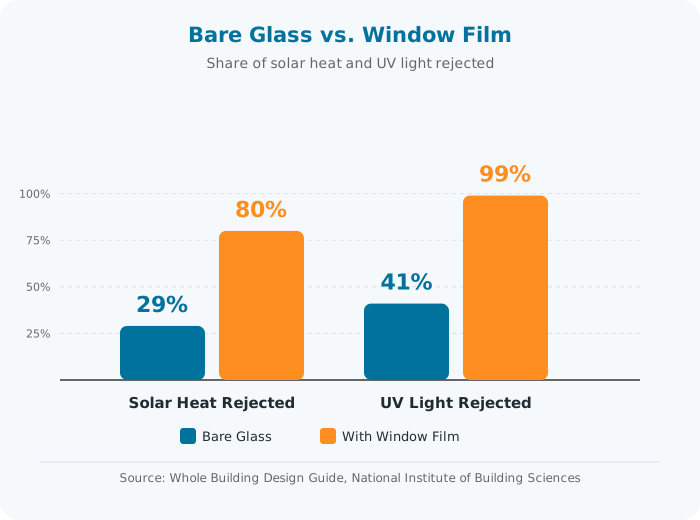
Bare glass does very little on its own. According to the Whole Building Design Guide, a resource maintained by the National Institute of Building Sciences, untreated glass rejects only about 13 to 29 percent of solar heat and roughly 23 to 41 percent of UV light depending on the glass type. Add window film, and heat rejection can climb to around 80 percent, with UV rejection reaching 95 to 99 percent.
That gap is why film shows up so often as one of the fastest, least disruptive upgrades available for a window that’s already causing problems.
What We Offer, From Privacy to UV Protection
The right film depends on the glass, the room, and the problem you’re actually trying to solve.
Privacy Window Film
Reduces visibility into the space while still letting light through. A common choice for bathrooms, front-facing windows, and office glass where separation matters more than darkness.
Glare and Heat-Reducing Film
Built for rooms that take strong direct sun. Cuts brightness and heat gain so the space stays usable through the hottest part of the day.
Decorative Window Film
Frosted, patterned, or stained-glass-style finishes for entry doors, sidelights, conference rooms, and design-focused spaces.
UV-Protection Film
Built primarily to block ultraviolet light and protect flooring, furniture, and artwork, with minimal added tint or darkening.

Window Tinting vs. Other Sun Control Options
Film solves a different problem than shades, blinds, or exterior screens because it works directly on the glass instead of covering it. That makes it the right call when you want glare control or privacy without changing how the window looks from the room.
If you’d rather manage light with an interior fabric option, our roller shades or automated smart shades may fit better. For heat control that happens before sunlight ever reaches the glass, exterior solar screens are worth comparing. And if the priority is a more structured, adjustable look, take a look at blinds and shutters instead.
Quick Comparison Guide
Here’s how the main film categories stack up against each other.
| Film Type | Privacy | Heat Reduction | Visible Tint | Best For |
|---|---|---|---|---|
| Privacy Film | High | Moderate | Moderate | Bathrooms, street-facing windows, offices |
| Glare and Heat-Reducing Film | Moderate | High | Moderate to High | West-facing rooms, home offices, storefronts |
| Decorative Film | Moderate to High | Low | Varies by pattern | Entry doors, sidelights, conference rooms |
| UV-Protection Film | Low | Low to Moderate | Minimal | Rooms with fading floors, art, or furniture |
Why Professional Window Tinting Beats a DIY Kit
Retail tint kits exist, but bubbling, peeling edges, and uneven color are the most common results homeowners end up calling us to fix. Getting film to lay flat, cut cleanly at the frame, and perform consistently across a whole house or building takes practice most people only get once.
What Professional Installation Adds
- A clean, bubble-free finish that holds up for years
- Precise cuts at the frame with no visible gaps
- Consistent tint and performance across every window
- Guidance on which film actually solves your specific problem
- A warrantied result instead of a weekend experiment
Curious what a project like this typically costs? Our cost guide breaks down what affects pricing, and we offer financing options if you’d rather spread a larger project out over time.
Our Process
Consultation
We look at which windows are causing problems and whether the goal is privacy, heat control, glare, or a decorative finish.
Film selection
We walk through privacy, heat-reducing, decorative, and UV-protection options so you land on the right combination.
Professional installation
Glass is cleaned and prepped, film is cut precisely to the frame, and applied for a smooth, bubble-free finish.
Final walkthrough
We review the finished result and go over any care instructions specific to the film that was installed.
Signs It’s Time for Window Film or Home Window Tinting
- A room is uncomfortably bright or hot at the same time every day
- Floors, furniture, or artwork are visibly fading from sun exposure
- Street-facing windows leave a room feeling too exposed
- Glare makes it hard to see a TV, monitor, or storefront display
- You want a lower-profile solution than shades, blinds, or screens
- An existing DIY tint job is bubbling, peeling, or discolored
Window Film Fits Into a Bigger Plan
Film handles what happens at the glass, but it’s not the only tool available. If an outdoor living space needs coverage instead, our patio shades are built for that. Still comparing everything? We install every type of window treatment, so we can walk you through all of them.
Caring for Your Tint After Installation
Once film is properly cured, it holds up well with basic care. A soft cloth or squeegee and a mild, non-ammonia cleaner keep the surface clear without breaking down the film’s coating over time. Ammonia-based glass cleaners are the most common cause of premature clouding or peeling, so it’s worth checking labels before grabbing whatever is already under the sink.
Most professionally installed film carries a warranty that covers bubbling, peeling, or discoloration under normal conditions, which is one more reason a quality installation is worth the difference over a retail kit.
Window Film FAQs
Yes. Window film and window tinting are the same thing installed the same way. Tinting is the term most homeowners use first, while window film is the broader industry term that also covers clear, low-tint options.
Not necessarily. Many films are built for heat and UV reduction with minimal visible tint, so you can cut glare and protect interiors without noticeably darkening the room.
No. While privacy is a common reason homeowners choose it, film is also widely used for heat reduction, glare control, UV protection, and decorative finishes.
Yes. Commercial window film is common on storefronts, office partitions, and conference rooms for privacy, glare control, and a more finished appearance.
It varies by film type and exposure, but professionally installed, quality film is built for long-term performance rather than a short-term fix.
Yes. Contact us to schedule a consultation and go over window film or window tinting options for your home or business.
Get a Quote for Window Film Installation
Whether you call it window film, window tinting, or home window tinting, the goal is the same: better-performing glass without replacing a single window. Homeowners in the East Valley can see materials and finishes in person at the Mesa showroom, while the Florence office handles scheduling and consultations by phone and online for homeowners farther south.