

Custom Smart Shades
Most homeowners search for these as motorized shades or motorized blinds, and a smaller number search “smart shades,” but they’re all pointing at the same upgrade: window coverings that raise, lower, and adjust themselves instead of requiring a hand on every single window. At Colby Window Solutions, we build smart shades around the fabric, room, and control style that actually fits how you live, not just the flashiest tech on the shelf.
The appeal is rarely the gadget itself. It’s what the gadget removes: the daily walk from window to window, the shade that never gets adjusted because it’s a hassle, the cord that’s a safety concern in a house with kids. Automation solves a real, repeated annoyance.
Motorized Shades vs. Manual: What Actually Changes
A manual shade and a motorized version of the same fabric perform identically in terms of privacy and light control. What changes is whether you actually use it. Shades that are annoying to reach, tall windows that need a pole, or a row of six windows that all need adjusting at the same time all tend to get set once and left alone.
Motorized blinds remove that friction. A remote, a wall switch, or a schedule does the adjusting, which means the shade actually gets used the way it was designed to be used, multiple times a day, instead of getting stuck in one position for months.
How the Automation Actually Works
Under the fabric, a small motor built into the roller tube does the work that used to take a hand crank or a pull cord. From there, you choose how you want to trigger it: a handheld remote, a wall-mounted switch, a scheduled time of day, or a connected app that ties into a broader smart-home setup.
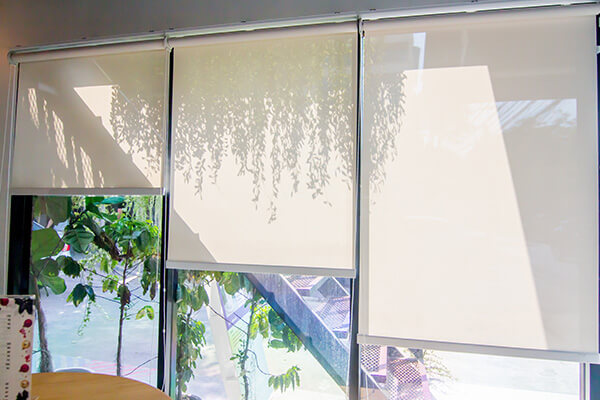
None of that changes what the fabric does once it’s down. Light-filtering, room-darkening, and solar-filtering options all still exist. Automation is a layer on top of the fabric choice, not a replacement for it.
What the Research Says About Automated Shading
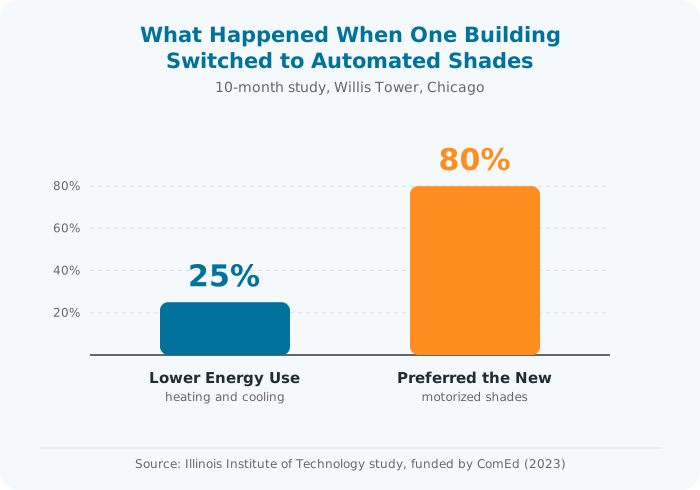
This isn’t just a comfort claim. A ten-month study at Chicago’s Willis Tower, conducted by researchers at the Illinois Institute of Technology and funded by the utility ComEd, tested manual control against scheduled and sensor-based automation on the same shades. The automated setup cut heating and cooling energy use by 25 percent compared to manual operation, and 80 percent of the people using the space said they preferred the automated shades over the old manual blinds.
That combination, lower energy use and higher day-to-day satisfaction, is the actual case for motorized shades. It isn’t just about convenience for its own sake.
Ways to Control Smart Shades
The right control method depends on the room and how many windows need to move together.
Remote Control
One-touch operation for a single window or a small group, no wiring changes or app setup required.
Scheduled Automation
Shades open and close on a set routine, useful for rooms with predictable sun exposure at the same time each day.
Wall Switch Control
A fixed, always-there control for a room, similar to a light switch, with no remote to misplace.
Connected App and Smart-Home Control
Ties shades into an existing smart-home system for grouped scenes, voice control, or remote access away from home.
Motorized Options We Install
The best fit depends on the window, the room, and how much you want automation to handle.
Motorized Roller Shades
The most common starting point. A clean, simple profile with the fabric choice of a standard roller shade, plus motorized operation for tall or grouped windows.
- Works in light-filtering or room-darkening fabrics
- Strong fit for oversized or hard-to-reach windows
- Keeps the window profile minimal
Scheduled Privacy and Light Shades
Set to move on a routine so glare gets managed in the afternoon and privacy kicks in in the evening without anyone touching a remote.
- Best for rooms with predictable sun patterns
- Reduces the “set once and forget it” problem
- Useful for bedrooms and home offices alike
Grouped Remote-Controlled Shades
One remote operating several windows at once, built for rooms where multiple openings need to move together.
- Ideal for window walls and multi-window rooms
- No cords across a wide span of glass
- Simple upgrade path from manual shades
Connected Smart Shades
Integrates with an existing smart-home platform so shades can be part of a morning routine, a movie-night scene, or a voice command.
- Works alongside existing smart-home hardware
- Good fit for new builds and remodels
- Supports one-touch, whole-room control
Where Motorized Shades Make the Biggest Difference
- Tall windows or stairwells where a pole or cord is impractical
- Rooms with several windows that need to move together
- Bedrooms where privacy needs to change on a schedule
- Homes with kids or pets where cordless operation matters
- Media rooms that need quick, repeatable room-darkening
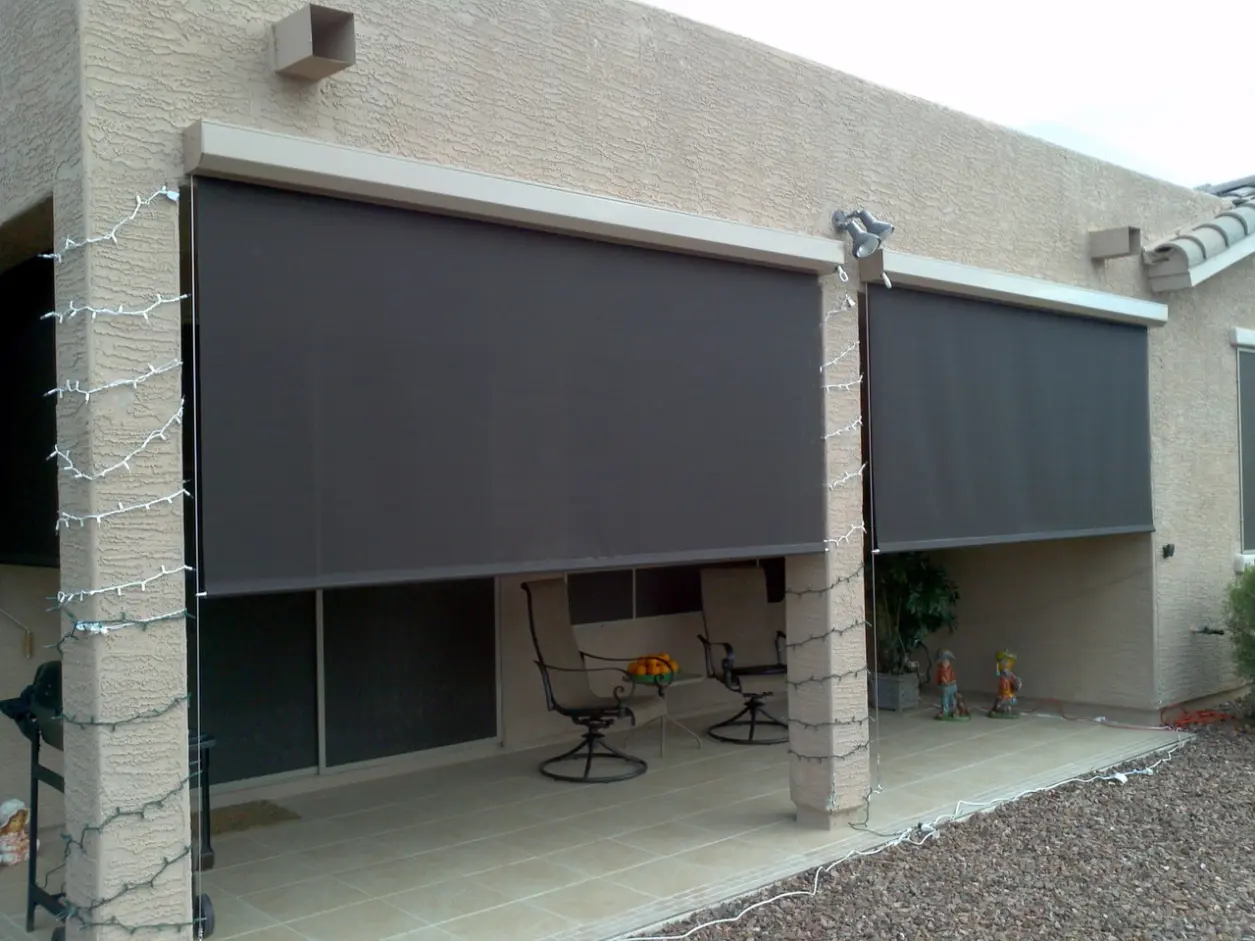
If the room’s bigger problem is heat coming through the glass rather than how the shade operates, pairing smart shades with exterior solar screens often solves both at once.
Smart Shades vs. Manual: A Quick Comparison
Here’s how motorized and manual options stack up on the things homeowners actually ask about.
| Feature | Manual Shades | Motorized Shades |
|---|---|---|
| Daily ease of use | Depends on window height and reach | Consistent regardless of window size |
| Cordless safety | Varies by shade | Standard |
| Grouped window control | One at a time | Multiple shades at once |
| Scheduled operation | Not available | Available |
| Upfront cost | Lower | Higher, offset by usage and convenience |
Why Custom Motorized Shades Outperform Retail Kits
Retail motorization kits exist, but they’re built to fit a range of window sizes approximately, not your window specifically. That shows up as motors that strain on oversized shades, brackets that don’t quite line up, and hardware that wasn’t sized for the fabric weight it’s actually carrying.
What a Custom Install Adds
- Motors sized correctly for the shade’s weight and width
- Clean wiring or battery placement, hidden from view
- Consistent operation across every shade in a multi-window install
- Professional programming for schedules and smart-home pairing
- Support if a control or motor ever needs service
Curious what a project like this typically runs? Our cost guide breaks down what affects pricing, and we offer financing options if you’d rather spread a larger project out over time.
Our Process
Consultation
We look at each window, how the room gets used, and whether remote, scheduled, or connected control fits best.
Measurement and system selection
We measure every opening and match fabric, motor size, and control style to the actual windows involved.
Installation and programming
Shades are mounted, wired or paired, and programmed so remotes, schedules, and smart-home links work correctly from day one.
Walkthrough
We show you how to operate and adjust everything, and set expectations for battery life or maintenance if applicable.
Signs It’s Time to Switch to Motorized Blinds
- You have windows tall enough that reaching them is genuinely difficult
- A row of windows never gets adjusted because it’s too much effort
- Cords are a real concern in a home with young kids or pets
- You’re renovating and want a cleaner, cord-free finish
- You already have smart-home devices and want shades in the mix
- You keep meaning to adjust shades for comfort and never actually do it
Smart Shades Fit Into a Bigger Plan
Motorization is one variable among several. If a more structured, slat-based look matters more than automation, compare blinds and shutters. If you want the same fabric options without the automation cost, our roller shades cover that ground manually. For heat control at an outdoor living space, see our patio shades, and if the goal is cutting heat at the glass itself, our window film is worth a look too. Still comparing everything? We install every type of window treatment, so we can walk you through all of them.
Smart Shades FAQs
Yes. Smart shades, motorized shades, and motorized blinds all describe the same category of automated window coverings. The naming difference usually comes down to what someone is used to calling them.
Not usually. Most motorized shades run on rechargeable or long-life batteries, though hardwired options exist for whole-home installations where that makes more sense.
Yes. A remote or a wall switch operates them just fine on their own. Smart-home integration is an option, not a requirement.
Independent research backs this up. A Chicago building study found a 25 percent drop in heating and cooling energy use when shades were automated instead of manually operated.
Quality motors and professional installation matter more than the automation itself. A correctly sized motor on a correctly measured shade holds up well with normal daily use.
Yes. Contact us to schedule a consultation and go over motorized shade options for your home.
Get Started with Custom Smart Shades
Whether you call them smart shades, motorized shades, or motorized blinds, the goal is the same: less daily hassle and a shade that actually gets used the way it’s supposed to. Homeowners in the East Valley can see materials and finishes in person at the Mesa showroom, while the Florence office handles scheduling and consultations by phone and online for homeowners farther south.