

Custom Patio Shades
A covered patio isn’t automatically a usable patio. Once the sun swings around in the afternoon, even a fully roofed space can turn into the hottest, brightest spot in the yard. Patio shades solve that specific problem: they hang at the outer edge of the covered area and block the sun before it ever reaches the furniture, the flooring, or the people sitting there. At Colby Window Solutions, we build patio shades sized to the exact opening, in the fabric and operating style that matches how the space actually gets used.
Think of it as reclaiming hours of the day. A patio that’s only comfortable in the morning becomes usable well into the afternoon and evening once the harshest sun is blocked at the edge instead of pouring across the whole space. Some homeowners search for these as patio shades, others as outdoor shades, but the goal is identical either way.
What Patio Shades Actually Do
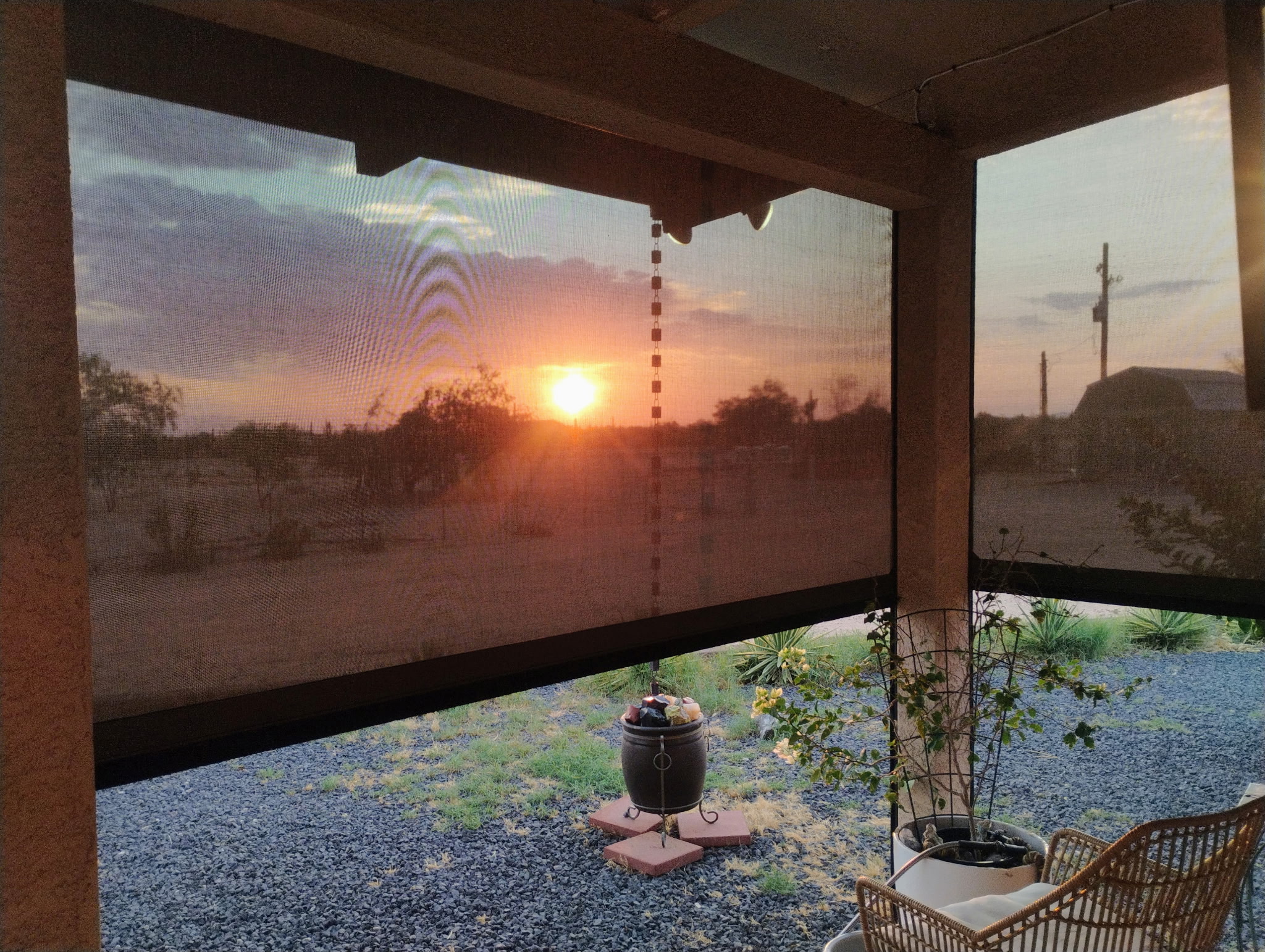
A patio shade is a fabric screen that mounts at the roofline of a covered patio, pergola, or porch and lowers down over the open side. Instead of shading the whole yard, it targets exactly where the sun is getting in, whether that’s a west-facing opening that lights up every afternoon or a wide entertaining area that never quite cools off.
Because it’s exterior and mounted outside the living space, it’s blocking heat and glare before either one becomes a problem indoors or out. That’s a meaningful difference from anything mounted on the glass itself or hanging inside a window.
Why a Covered Patio Still Needs Shade
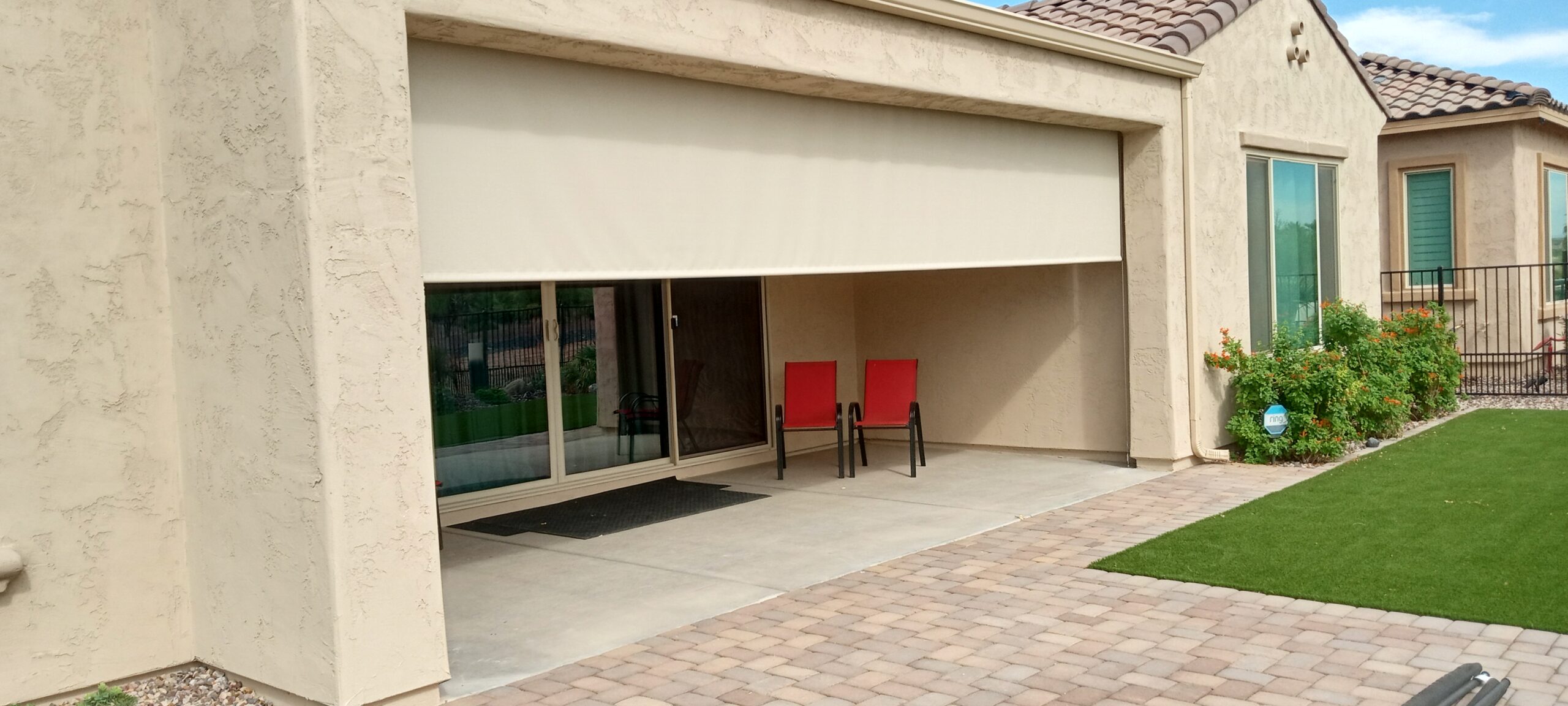
A solid roof blocks sun coming straight down, but it does nothing about sun coming in at an angle, which is most of what a patio deals with during the afternoon. Low, direct sun slides right under a roofline and hits furniture, flooring, and anyone sitting near the open side.
Patio shades close that gap. Lowered at the right time of day, they cut the angled sun that a roof alone can’t touch, which is usually the difference between a patio that’s comfortable for an hour and one that’s comfortable all afternoon.
Why Surface Temperature Matters More Than You’d Think
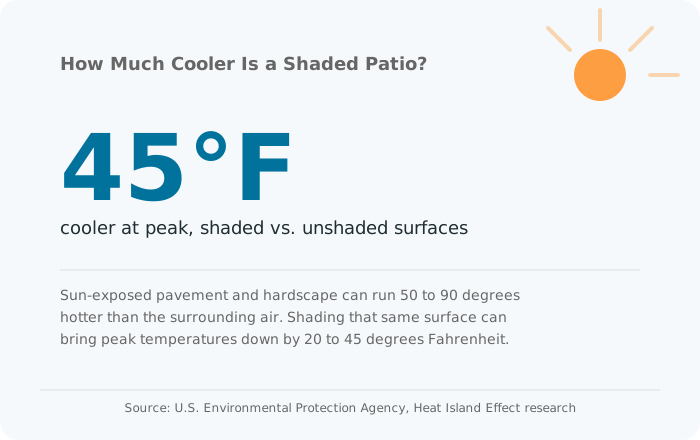
The air temperature on a patio isn’t the whole story. Concrete, pavers, and other hardscape sitting in direct sun absorb heat all day and keep radiating it back long after the sun has moved. Research on the urban heat island effect, compiled by the U.S. Environmental Protection Agency, found that shaded surfaces can run 20 to 45 degrees Fahrenheit cooler at their peak than the same surface left unshaded.
That’s the real reason a shaded patio feels so different from an unshaded one, even when the air temperature is identical. The shade isn’t just blocking sun from hitting you directly. It’s keeping the ground, the furniture, and the walls around you from turning into a slow-release heater.
Patio Shade Options We Install
The right setup depends on the opening, how often it’s used, and how much control you want over when it’s up or down.
Manual Patio Shades
A crank or pull-chain system that keeps cost down for openings that don’t need to move often, or for homeowners who are fine operating it by hand each time.
Motorized Patio Shades
Remote or wall-switch operation for larger openings, multiple shades that need to move together, or anyone who wants the shade down before they even step outside.
Retractable Patio Shades
Rolls up out of the way when it isn’t needed, so the patio stays fully open on cooler days or in the evening and shaded only when the sun actually calls for it.
Fixed-Panel Patio Shades
A permanently mounted screen for openings that face harsh sun all day and don’t need the flexibility of raising and lowering on demand.
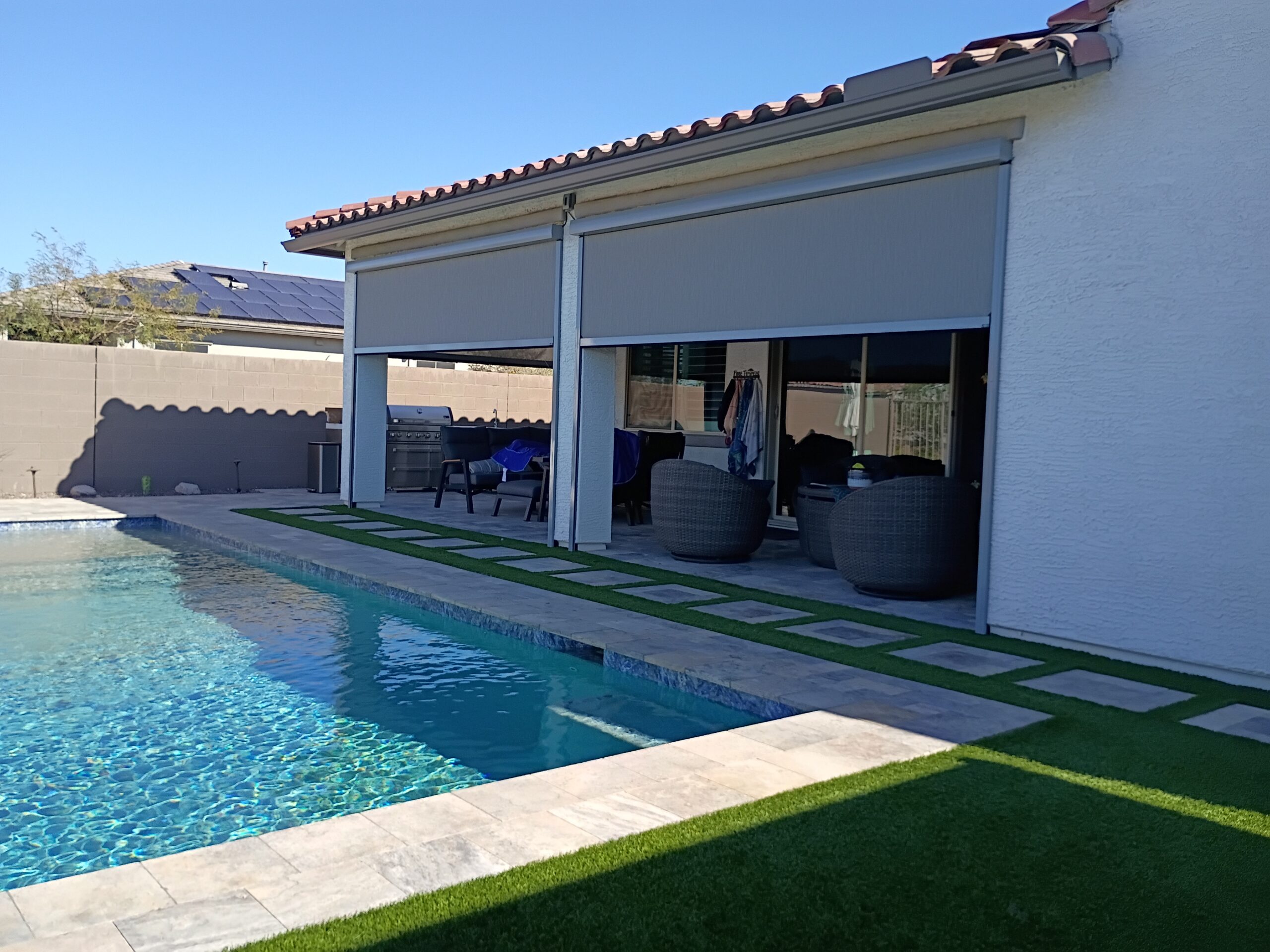
Where Outdoor Shades Make the Biggest Difference
- West-facing patios that heat up every afternoon
- Poolside patios where afternoon glare and heat cut usable time short
- Outdoor kitchens and dining areas used well into the evening
- Large openings on garage-style or fully retractable patio doors
- Any covered space where the open side still lets in direct sun
If the goal is shading a window instead of an outdoor opening, exterior solar screens are built specifically for that.
Quick Comparison Guide
Here’s how the main patio shade options compare on the things homeowners ask about most.
| Type | Operation | Flexibility | Upfront Cost | Best Fit |
|---|---|---|---|---|
| Manual Shades | Crank or pull-chain | Moderate | Lower | Smaller or occasional-use openings |
| Motorized Shades | Remote or wall switch | High | Higher | Large or frequently used openings |
| Retractable Shades | Manual or motorized | Highest | Varies | Patios used differently across seasons |
| Fixed-Panel Shades | None, permanently in place | Lowest | Lowest | Openings with harsh sun all day |
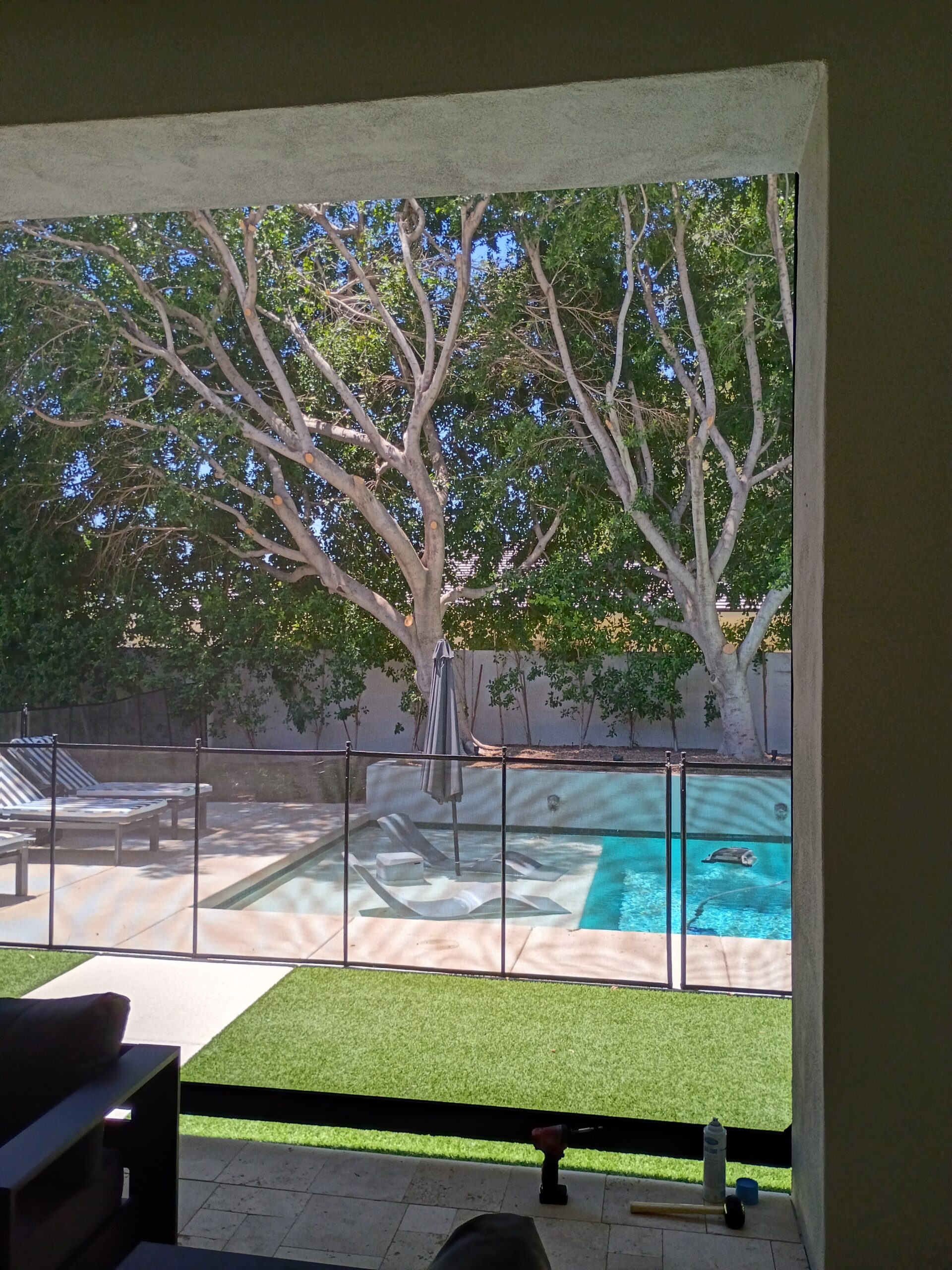
Why Custom Outdoor Shades Outperform Off-the-Shelf Screens
Big-box retractable screens are built to fit a range of standard openings approximately, not the exact dimensions of your patio. That shows up as gaps at the edges where sun sneaks through, hardware that struggles with wind, and a fabric that doesn’t quite reach the full width of the opening.
What a Custom Install Adds
- A precise fit with no light gaps at the sides or bottom
- Hardware rated for outdoor wind and weather exposure
- Consistent color and fabric across multiple openings on the same patio
- Manual or motorized operation, installed and programmed correctly
- Professional measuring so the finished look is clean from every angle
Curious what a patio shade project typically costs? Our cost guide breaks down what affects pricing, and we offer financing options if you’d rather spread a larger project out over time.
Our Process
Site evaluation
We walk the patio with you to see where the sun comes in, when, and how the space gets used throughout the day.
Fabric and operation selection
We help you weigh manual versus motorized, and fixed versus retractable, against how the opening is actually used.
Precise measuring and fabrication
Every shade is built to the exact width and drop of the opening, so there are no gaps and no leftover slack.
Professional installation
Shades are mounted level and secure, with hardware built to handle outdoor wind and daily use.
Signs It’s Time to Add Patio Shades
- Your covered patio is still too hot or too bright to use in the afternoon
- Furniture and outdoor rugs are visibly fading from sun exposure
- You avoid the patio at exactly the times you’d otherwise want to use it
- Glare makes it hard to see a TV or grill from certain seats
- An existing screen has torn, faded, or stopped operating smoothly
- You want more privacy from a neighboring yard or street view
Patio Shades Fit Into a Bigger Plan
Patio shades handle the outdoor side of sun control, but they’re not the only option we install. If a window rather than an outdoor opening is the problem, our solar screens handle that from the outside, and our window film works directly on the glass. For interior light control, compare roller shades, blinds and shutters, or automated smart shades. Still comparing everything? We install every type of window treatment, so we can walk you through all of them.
Patio Shades FAQs
Yes. A roof blocks sun coming straight down, but not the angled afternoon sun that slides in from the side. Patio shades block that angled sun, which is often the bigger source of afternoon heat and glare.
Manual shades use a crank or pull-chain and cost less upfront. Motorized shades operate on a remote or wall switch, which is more convenient for larger openings or shades you want to adjust throughout the day.
Yes, when properly installed. Professional-grade hardware and fabric are built for continuous outdoor exposure, unlike lighter indoor materials.
Not necessarily. Fabric openness varies, so you can choose a level that blocks sun and adds privacy while still preserving some visibility, or a tighter weave if blocking the view is the priority.
Yes. Depending on the fabric and openness level, patio shades can meaningfully reduce visibility into the space while still allowing airflow.
Yes. Contact us to schedule a consultation and go over patio shade options for your outdoor space.
Get Started with Custom Patio Shades
A patio that’s only usable in the morning is a patio that’s only half doing its job. Homeowners in the East Valley can see materials and finishes in person at the Mesa showroom, while the Florence office handles scheduling and consultations by phone and online for homeowners farther south.