


If you are wondering how long do custom blinds last, the honest answer is that there is no single number that applies to every window. Quality custom blinds can provide many years of dependable use, and well-built interior shutters often last considerably longer, but material, sun exposure, humidity, how often they are operated, installation quality, and maintenance all shape the outcome. Because custom window treatments are measured and installed for the specific window rather than trimmed to fit, they tend to face less of the binding and uneven wear that shortens the life of an ill-fitting stock blind.
Before getting into materials and maintenance, it helps to clear up a number that gets repeated online more often than it should: a three-year figure that actually comes from a government paperwork chart, not a study of how long blinds hold up in a home.
Where the “Three-Year” Blinds Myth Actually Comes From
A U.S. Department of Housing and Urban Development document called the Special Claims Processing Guide includes a sample life expectancy chart used to calculate certain damage claims in assisted housing. That chart lists a three-year figure for window shades, screens, and blinds, alongside similarly short figures for flat interior paint and longer figures for items like water heaters and refrigerators.
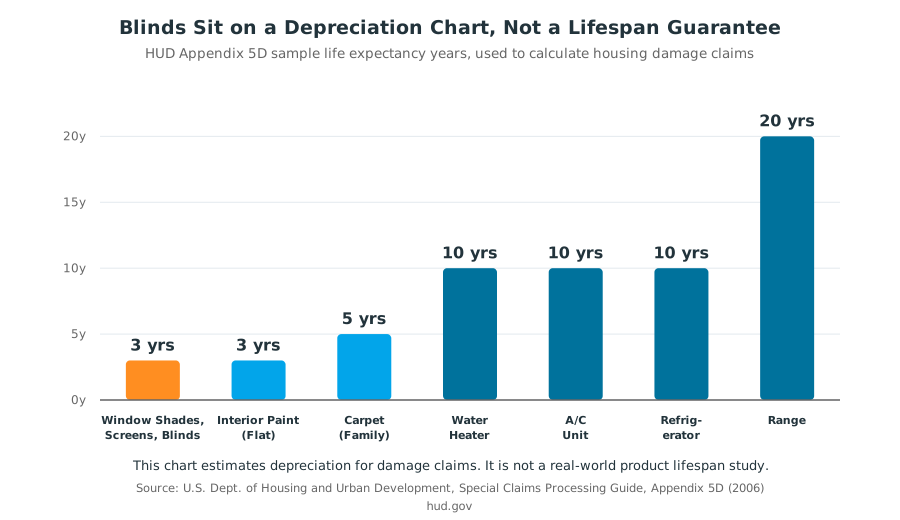
That chart exists to help calculate how much of a repair cost a tenant should owe after damage, not to describe how long a properly cared for window covering will actually function. Treating it as a lifespan claim for retail blinds misreads the document. It sits in the same short column as flat paint, which nobody expects to need repainting every three years in a typical home.
How Long Do Custom Blinds Last in Everyday Use?
There is no government or industry standard establishing a required number of years for custom blinds. As a practical guideline, well-installed, properly operated blinds from a reputable manufacturer commonly remain useful for many years, and some stay in service well beyond a decade. Others need replacement sooner because of heavy daily use, intense sun exposure, or a harsher installation environment.
The advantage of going custom is less about a guaranteed number of years and more about matching the right materials, dimensions, hardware, and operating system to the actual window. A blind that fits correctly is less prone to the uneven loading, binding, and friction that wear down an ill-fitting stock blind over time. We size and install every custom blind and shutter we sell specifically for the window it goes on, which is one of the more overlooked factors in how long a window covering actually lasts.
Interior shutters tend to hold up especially well because they rely on rigid panels and louvers rather than lift cords and flexible fabric. Well-maintained shutters can remain in service for decades, though claims promising an exact 15, 20, or 25 year lifespan for every shutter should be read as estimates rather than guarantees.
How Long Do Custom Blinds Last Compared to Store-Bought Options?
It is tempting to say custom blinds automatically last two or three times longer than store-bought versions, but no authoritative industry study backs a specific multiplier like that. Quality varies within both categories. What custom treatments do offer is the ability to choose the material, hardware, and operating system that fits the room and the window, plus professional measuring and installation that reduces alignment problems from the start. The HUD three-year figure mentioned earlier does not establish an expected consumer lifespan for either category. It is best to judge a specific blind by its construction, warranty, and installation rather than by an unsupported multiplier.
How Long Do Custom Blinds Last With Proper Care?
Maintenance genuinely changes how long blinds perform well. Dust and debris build up around slats, tracks, and moving parts, while forceful operation puts unnecessary strain on cords, gears, springs, and tilt mechanisms. Gentle, regular care tends to matter more than occasional deep cleaning.
- Dust slats regularly with a soft microfiber cloth, duster, or an appropriate vacuum attachment.
- Avoid forcing a blind that will not raise, lower, or tilt smoothly.
- Follow the manufacturer’s cleaning instructions instead of assuming every material tolerates water.
- Keep natural wood blinds away from excess moisture whenever possible.
- Use only limited moisture on faux wood or composite materials unless the manufacturer specifically allows more thorough cleaning.
- Have persistent mechanical issues looked at before repeated use causes further damage.
What Affects the Lifespan of Blinds and Shutters?
Several everyday factors influence longevity far more than any advertised average.
- Sun exposure: Ultraviolet radiation and heat can fade finishes, discolor fabric, and gradually weaken certain plastics.
- Humidity and moisture: Natural wood can swell, warp, or lose its finish with repeated exposure to high humidity.
- Material selection: Wood, faux wood, aluminum, fabric, and composite materials each respond differently to heat, moisture, impact, and sunlight.
- Operating frequency: Blinds raised and lowered several times a day accumulate more mechanical cycles than ones that stay mostly still.
- Installation quality: Proper alignment and secure mounting help prevent binding and uneven movement.
- Cleaning habits: Harsh chemicals, excess water, and abrasive tools can damage finishes and fabric.
- Hardware quality: Lift systems, tilt mechanisms, motors, and mounting hardware vary considerably by manufacturer.
Material Quality and How Different Blinds Wear
Real Wood
Real wood blinds and shutters offer a classic look and solid dimensional strength, but wood reacts naturally to its environment. Persistent moisture can cause swelling or warping, and intense sunlight can gradually affect the finish, so following the manufacturer’s humidity and cleaning guidance matters more with real wood than with most other materials.
Faux Wood and Composite Materials
Faux wood is a popular pick for bathrooms, kitchens, and other spaces where moisture resistance matters. That said, “faux wood” describes several different materials, including PVC-based and composite materials, and their resistance to heat and warping varies by manufacturer. It is worth choosing an option rated for the specific room rather than assuming every faux wood material performs the same way.
Aluminum
Aluminum blinds sidestep most of the moisture-related issues that affect natural wood and can provide a long service life. They are not indestructible, though. Thin slats can bend or crease, finishes can wear over time, and hardware eventually shows the effects of frequent use.
Fabric Shades
Fabric shades can last for many years, but their appearance is often affected by sunlight, dust, and handling well before the lift mechanism actually fails. Fabric type, sun exposure, cleaning method, and how often the shade gets used all play a role.
Motorized Systems
Motorization removes the need to handle cords or fabric by hand and provides smooth, repeatable operation, but motors, batteries, remotes, and control modules are mechanical and electronic components that can eventually need service. There is no universal five or ten year figure for a motor’s lifespan, so it is worth checking warranty coverage and replacement-part availability for the specific system, including motorized smart shades if that is the direction you are considering.
Corded vs. Cordless Blinds: Safety Matters More Than Lifespan
Cordless systems have become increasingly important because accessible lift and tilt cords can pose a strangulation hazard to young children. Regulation in this area has moved quickly over the past several years, extending well beyond the stock blinds sold in big-box stores.
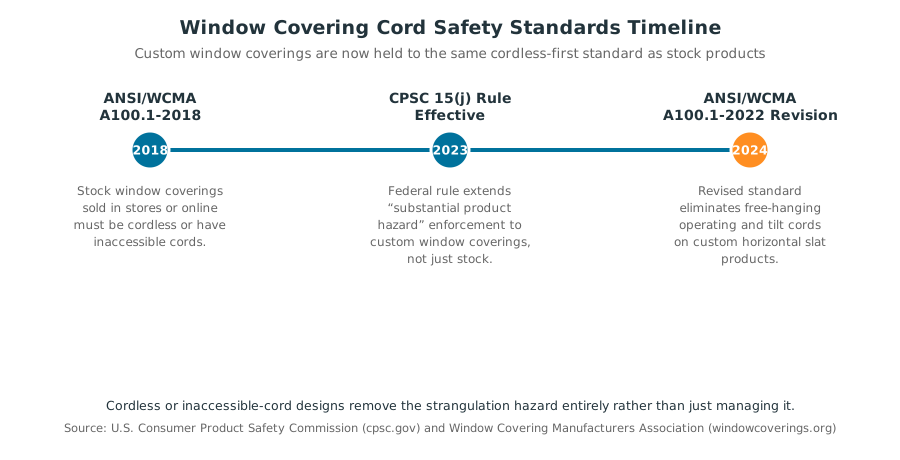
The current rules are more nuanced than simply saying every blind must be cordless. Stock and custom window coverings are treated somewhat differently, but the direction of travel is consistent: fewer accessible cords across the board. If your existing blinds still rely on exposed lift or tilt cords, a consultation can help you weigh cordless and motorized alternatives against what you have now.
Repair or Replace: How to Recognize the Right Time
A damaged blind does not automatically need to be replaced. Tilt mechanisms, individual slats, mounting hardware, motors, and remotes can often be repaired depending on the manufacturer and how the blind was designed.
Consider repair when:
- The blind is otherwise in good condition.
- Replacement parts are still available.
- The problem is limited to one mechanical component.
- The repair cost is reasonable next to the price of a new covering.
- The existing blind still suits the room’s look and function.
Consider replacement when:
- Slats are extensively warped, cracked, bent, or discolored.
- Fabric is badly faded, stained, or torn.
- Key replacement parts are discontinued.
- The headrail or other structural components are damaged.
- The blind keeps jamming or operating unevenly even after repairs.
- Exposed operating cords create a safety concern.
- Replacing it would meaningfully improve privacy, light control, energy performance, or ease of use.
The commonly repeated “50 percent rule,” which suggests replacing a blind whenever repair costs more than half the price of a new one, is a consumer budgeting habit rather than an official window covering standard. It is still a reasonable gut check once you compare the repair estimate against remaining condition, warranty coverage, and how much longer you expect to get out of the existing treatment. Our cost and pricing guide can help with that comparison if you are trying to decide between a repair and a full replacement.
Signs Your Window Coverings Are Nearing the End of Their Life
Some wear is purely cosmetic. Other signs mean the covering is becoming difficult or unsafe to keep using.
- Warped or broken slats: Damaged slats interfere with privacy and light control.
- Frayed cords: Damaged operating cords should be addressed promptly, especially in homes with children.
- Slipping or failing tilt mechanisms: Repeated trouble adjusting the slats usually points to worn hardware.
- Uneven raising and lowering: This often signals a tension, cord, spring, or alignment problem.
- Severe fading or discoloration: Sun exposure can permanently change fabrics and finishes.
- Damaged brackets: Loose or broken mounting hardware should be repaired right away.
- Motor or control problems: Repeated electronic failures may justify replacing the component or upgrading the system.
Can Window Treatments Improve Energy Efficiency?
Some window coverings help manage solar heat gain and heat loss, though the actual energy performance varies a good deal by covering type and installation quality. The U.S. Department of Energy’s Building Technologies Office has found that cellular shade coverings can achieve stronger energy savings than most other common shading types when properly fitted, largely because their honeycomb structure traps an insulating layer of air against the window. Other coverings perform differently depending on climate, materials, and how the covering is actually used day to day, so it would be inaccurate to say every custom blind produces significant energy savings on its own.
If energy performance is a priority alongside appearance and privacy, our window treatments we install throughout the Phoenix area include several options built with insulation in mind, not just light control.
Understanding Window Treatment Warranties
Warranty coverage is worth comparing across options, but it does not guarantee a specific lifespan. The Magnuson-Moss Warranty Act regulates how written consumer product warranties must be disclosed and labeled, and it prevents a written warranty from completely wiping out the protections of an implied warranty. It does not, however, set implied warranties at a fixed federal duration. A commonly repeated claim that implied warranties automatically last four years actually confuses a state statute of limitations for filing a claim with the length of the warranty coverage itself, which is governed by state law and can be limited by the terms of a written warranty.
Before buying, it is worth reviewing the manufacturer’s specific warranty terms for:
- Operating mechanisms
- Motors and electronic components
- Fabrics and finishes
- Structural components
- Installation workmanship
- Exclusions for normal wear, misuse, or environmental damage
Frequently Asked Questions
There is no authoritative universal lifespan for custom blinds. Quality blinds commonly remain functional for many years, and some last a decade or longer, but the actual number depends on materials, hardware, usage, environmental exposure, and maintenance.
Often, yes. Interior shutters use rigid panels and relatively simple mechanical components, so well-made shutters can remain functional for decades. Their actual service life still depends on material, installation, and environmental conditions.
Many motorized systems allow individual motors, batteries, remotes, or control components to be serviced or replaced. Repairability depends on the manufacturer, the system’s design, and whether replacement parts are still available.
Use a soft, dry microfiber cloth or an appropriate vacuum attachment for routine dusting. If deeper cleaning is needed, follow the manufacturer’s instructions and avoid saturating natural wood with water.
Not necessarily. Cordless systems remove exposed lift cords, but they still contain springs, gears, or other internal mechanisms that can wear over time. Their main advantage is improved cord safety, particularly in homes with children.
No. A warranty spells out specific manufacturer obligations for covered defects during a stated period. It is not the same as the blind’s expected lifespan, and normal wear is usually excluded from coverage.
Choose Window Treatments Built for the Long Run
The honest answer to how long do custom blinds last depends on the specific blind rather than a single advertised number. Quality materials, the right choice for the room, professional measuring, careful installation, and gentle daily use all help extend the useful life of blinds, shades, and shutters.
We help Arizona homeowners compare window treatment materials and operating systems based on what each room and window actually demands. Homeowners in the East Valley can see materials and finishes in person at our Mesa showroom, while our Florence office handles scheduling and consultations by phone and online for homeowners farther south. If your current blinds are warped, difficult to operate, outdated, or simply not meeting your needs anymore, reach out and we can talk through repair, replacement, and financing options for a full replacement.