

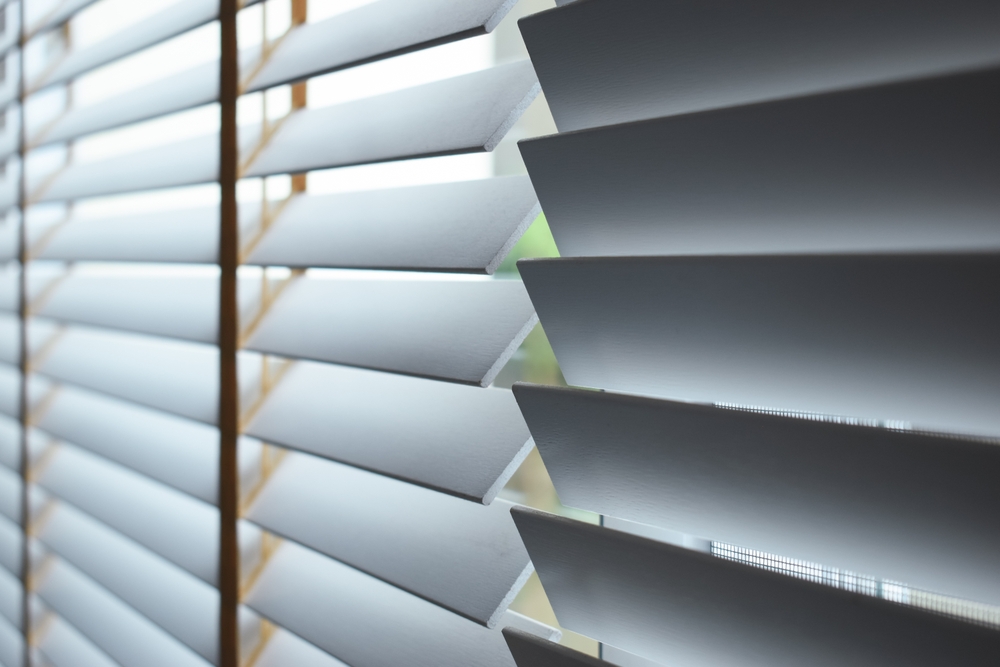
If you have ever stood at a window trying to decide which way to angle the slats, you already know the tradeoff. Turn them one way and the room feels brighter but exposed. Turn them the other way and privacy improves while the view and the daylight shrink. The honest answer to blinds up or down for privacy is that it depends on where the window sits, not on one rule that works for every room in the house.
Horizontal blinds are really just adjustable light valves. Moving the slats changes both how much light gets in and the angles a person outside can see through. Once you understand how window height and slat direction interact, picking the right position for any given window gets a lot easier.
Key Takeaways
- Window height decides the direction. The tilt that blocks a sidewalk-level view is not always the tilt that blocks someone looking up from below a second-story window.
- Closed beats partially tilted for real privacy. Gaps between slats, rout holes, and side clearances mean a partially open blind is never a guarantee, even at a good angle.
- Slat angle also changes glare and heat. Research from Lawrence Berkeley National Laboratory shows solar heat gain shifts measurably between closed, angled, and open slat positions.
- Interior lighting flips the equation at night. A daytime setting that feels private can become see-through once the lights are on and it is dark outside.
Blinds Up or Down for Privacy: The Quick Answer
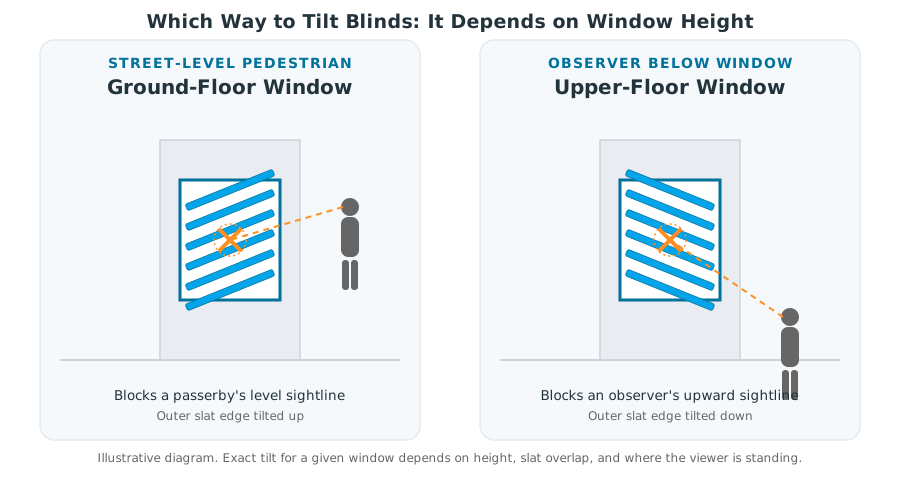
For most ground-floor windows, tilting the slats so the outer edge points up interrupts a passerby’s straight-on line of sight while still letting some daylight bounce in. For windows above street level, where someone would have to look upward to see in, the opposite tilt often works better because it blocks that upward angle instead. There is no single position that is correct for every window, which is why we walk homeowners through their specific rooms rather than repeating a generic rule.
How Window Height Changes Which Way Blinds Should Face
A bedroom window at eye level and a second-story window above a driveway do not see the same threats to privacy, so they should not automatically get the same slat position. What matters is where the unwanted sightline is actually coming from, then adjusting the slats until that specific line of sight is interrupted.
Blinds Up or Down for Privacy on the First Floor
On many ground-floor windows, tilting the slats so their outer edges sit higher than their inner edges makes it harder for someone standing near the glass to see down into the room. This works because the slats physically block the near-horizontal sightline a pedestrian or a neighbor would have. It is not absolute privacy, since side gaps, rout holes, and imperfect overlap can still let small amounts of light and visibility through, but it is a meaningfully better starting position than leaving the slats flat.
Blinds Up or Down for Privacy on the Second Floor and Above
Once a window sits well above the height of anyone outside, the geometry flips. A person standing on a sidewalk or in a neighboring yard is now looking upward at the glass, so the tilt that protected a ground-floor window may do very little here. The more reliable position is often the opposite tilt, angling the outer edge downward so it interrupts that upward sightline instead. Homes near two-story neighbors deserve extra attention, since a nearby upper window can create a downward sightline that would not exist from the street.
The most dependable way to confirm any of this is to step outside and look at the window from the actual vantage points people use, including the sidewalk, a neighbor’s yard, and a driveway. That single check is more reliable than any fixed angle rule, and it is something our installers walk clients through during an in-home consultation whenever privacy is the main concern.
What Slat Angle Does to Daylight and Glare
Slat position does more than manage privacy. Tilting the slats also changes how much direct sunlight reaches the room and how much of that light turns into glare on a television, a monitor, or a kitchen counter.
An upward tilt tends to redirect light toward the ceiling rather than straight into the room, which is useful when the goal is cutting glare on a screen or protecting furniture and flooring from direct sun. A downward tilt lets more direct light through the gaps, which can be worth using in winter when extra solar warmth is welcome, but it usually increases glare and heat when the sun is strong.
| Slat Position | Sightline Through the Blind | Daylight Admitted | Typical Use |
|---|---|---|---|
| Closed | Minimal | Lowest | Nighttime privacy, bedrooms after dark |
| Angled (45 degrees) | Reduced, direction dependent | Moderate | Daytime privacy with usable light |
| Open (horizontal) | Highest | Highest | Maximum view and daylight, minimal privacy |
The Research Behind Slat Angle and Solar Heat Gain
This is not just a comfort preference. Lawrence Berkeley National Laboratory measured how a venetian blind’s slat tilt changes the solar heat gain coefficient, or SHGC, of a window system, which is a standard measure of how much solar heat passes through a window assembly. Their laboratory measurements on a blind paired with clear double glazing found a meaningful difference between closed, 45 degree, and fully open slat positions.
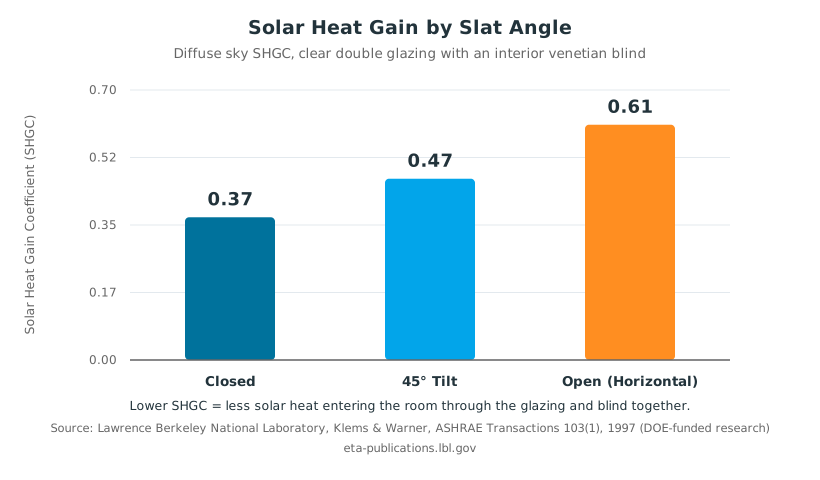
The lower the SHGC, the less solar heat makes it into the room. Notice that the 45 degree tilt sits roughly in the middle between fully closed and fully open, which matches what most homeowners experience day to day: a partial tilt is a genuine middle ground for heat, not just for light and privacy. You can read the full Lawrence Berkeley National Laboratory study if you want the full methodology behind these numbers.
Best Blind Positions by Room
Different rooms tend to prioritize different things, so it helps to think room by room rather than applying one setting to the whole house.
- Bedrooms: Close the slats fully at night rather than relying on a partial tilt, then reopen them enough for daylight once privacy is less of a concern.
- Living rooms: A partial tilt often gives the best balance, cutting glare on a television or a window-facing seating area while keeping the room from feeling closed in.
- Street-facing windows: Position the slats to interrupt the actual eye-level sightline of people walking or driving past, and adjust seasonally as the sun’s angle changes.
- Upper-story windows: Think about anyone standing below, not just people at the same level, since the sightline geometry is reversed.
- Home offices: A slight upward tilt can reduce screen glare during work hours without blacking out the room entirely.
Because privacy needs shift with the time of day, plenty of homeowners end up adjusting the same window differently in the morning than they do after sunset, when interior lighting can make a home far easier to see into from outside. If manually adjusting several windows throughout the day sounds like more than you want to manage, motorized smart shades can be scheduled to change position automatically as the sun moves.
Does Slat Direction Change Energy Efficiency Too?
Slat position affects more than comfort in the moment. According to the U.S. Department of Energy, roughly 30 percent of a home’s heating energy is lost through windows, and in cooling season, about 76 percent of the sunlight that hits a standard double-pane window turns into heat once it is inside. Adjusting window coverings is one of the more direct ways to push back on both numbers.
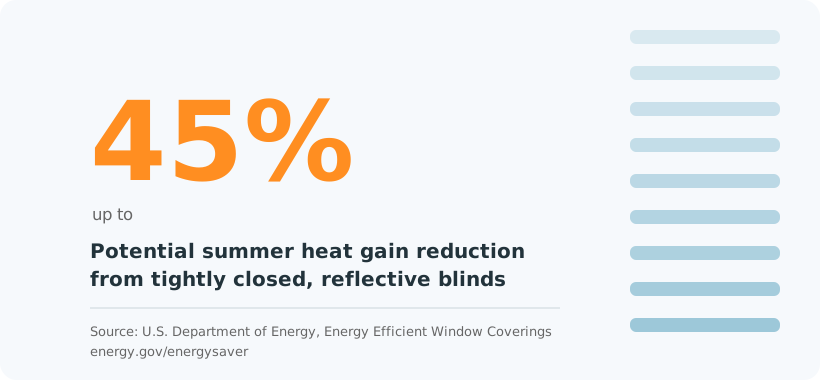
The Department of Energy notes that when they are completely closed and lowered on a sunny window, highly reflective blinds can meaningfully cut heat gain, and that the slats can also be tilted to reflect sunlight onto a light-colored ceiling, which diffuses light without adding much heat or glare. It is worth being clear that this is a solar control benefit rather than true insulation. Standard aluminum, vinyl, or wood blinds have plenty of small gaps around and between the slats, so they do relatively little to stop heat loss through the glass in winter compared with tighter-sealing options.
Choosing a Blind Material That Supports Privacy and Light Control
Material affects more than looks. It changes how the slats reflect or absorb sunlight, how they hold up to humidity, and how precisely they seal when closed.
- Faux wood: A common pick for kitchens, bathrooms, and other spaces with moisture, since it resists warping better than natural wood.
- Natural wood: Brings genuine grain and texture, but should generally be kept out of consistently humid rooms unless the manufacturer specifically rates it for that use.
- Aluminum: Durable, easy to wipe down, and a solid choice for high-traffic areas, though finishes vary by manufacturer.
Slat width and overlap also matter for privacy, since a wider slat with more overlap closes gaps more completely than a narrow one. We install and can walk you through custom horizontal blinds and shutters in person, so you can compare slat widths and materials before deciding what goes on your own windows.
Frequently Asked Questions
For many first-floor windows, angling the slats so the outer edge points up helps block a passerby’s direct line of sight. Window height and the observer’s position both matter, so it is worth checking the actual sightline from outside whenever possible.
An upward tilt is commonly the better choice for first-floor windows, since it interrupts a nearby pedestrian’s eye-level view. For the strongest nighttime privacy, close the blinds fully rather than relying on a partial angle.
Above street level, the geometry usually reverses. Tilting the outer edge downward tends to block an upward sightline from someone standing below more effectively than the tilt that works on the ground floor.
They can go either direction. What actually matters is whether the chosen angle blocks the real sightline of someone outside, which depends on window height, slat width, and how much the slats overlap.
Close the slats as completely as the blind allows rather than leaving them partially open. Bright interior lighting at night makes any remaining gaps far more noticeable from outside than they would be during the day.
Some window treatments improve daytime privacy while preserving an outward view, but the effect usually depends on interior and exterior lighting being different enough. Top-down, bottom-up shades take a different approach, covering the lower half of a window for privacy while leaving the top open for light.
Getting the Right Blind Position for Your Own Windows
Slat direction is a genuinely useful, no-cost adjustment, but it works best alongside the right blind for the window in the first place. Slat width, material, mounting depth, and how tightly a blind is installed all affect how much privacy, light control, and heat reduction you actually get once it is hung. We help homeowners compare those details in the context of their own windows rather than a showroom sample, and we cover the full range of window treatments we install throughout the Phoenix area, from horizontal blinds to motorized shades.
If you would like to compare pricing across materials before deciding, our cost and pricing guide breaks down what typically drives the price of custom blinds, and our financing options cover ways to spread out the cost of a larger project.
Homeowners in the East Valley can see slat widths, materials, and finishes in person at the Mesa showroom, while our Florence office handles scheduling and consultations by phone and online for homeowners farther south. Either way, reach out and we can walk through which slat direction and which blind will actually solve the privacy and light issues you are dealing with.