

Do solar shades provide privacy at night? Not when the lights are on inside. Your shades cut the glare and kept the afternoon heat out, and then the sun set, the lamps came on, and the window turned into a display case for the street. That is normal, and it is not a flaw in your shades. It comes down to how mesh fabric and light work together.
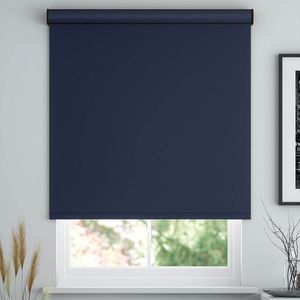
Solar shades are built for daylight. They filter glare, reduce solar heat, and keep your view of the yard. Nighttime privacy is a different job, and it takes a second layer. The good news is that you rarely need to tear anything out. Most homes in Arizona do well with mesh solar screen fabrics for the day plus a simple privacy layer for the evening.
Do Solar Shades Provide Privacy at Night? The Short Answer
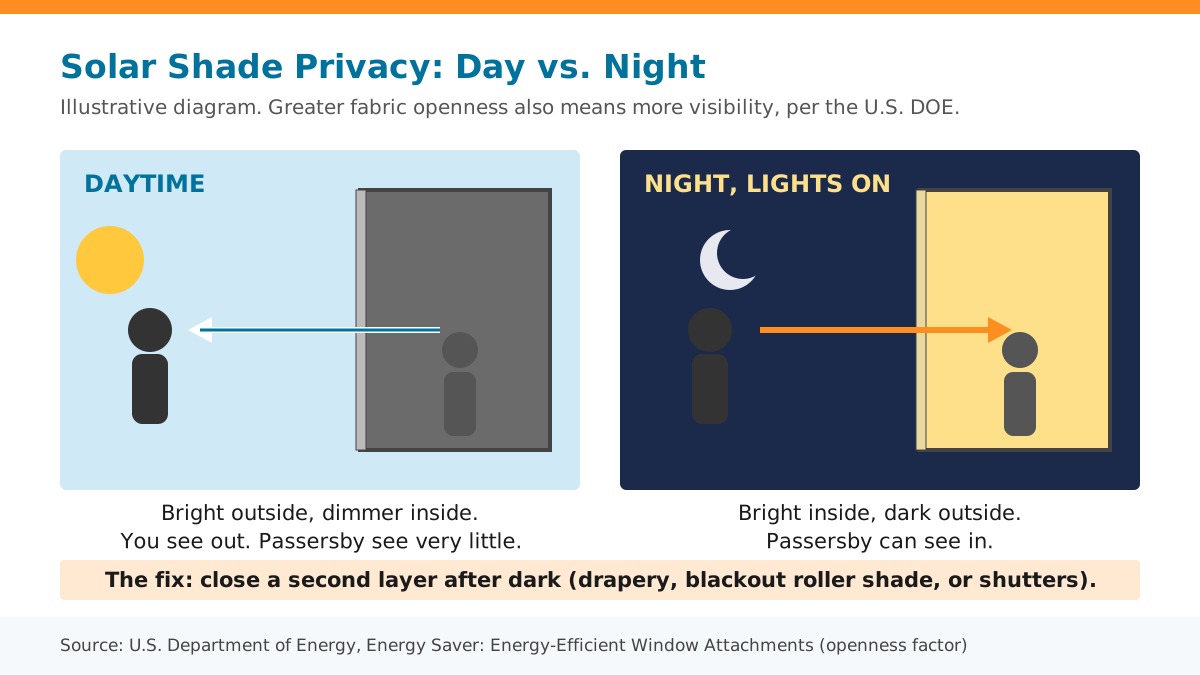
No, not on their own. With interior lights on and darkness outside, anyone standing in the yard or on the sidewalk can usually see shapes, movement, and often real detail through a standard solar shade. In daylight the situation reverses, which is why so many homeowners are happy with their shades at noon and uncomfortable at 8 p.m.
Why Solar Shade Privacy Flips After Sunset
A solar shade is not a one-way mirror. It is a tightly woven screen, and what you can see through it depends on which side of the glass is brighter. During the day the sun lights the outside far more strongly than your lamps light the inside, so the room behind the fabric stays dim and hard to see while your eyes, adjusted to the bright yard, see out comfortably.
At night the balance flips. Your living room becomes the brightest thing in the scene, the yard goes dark, and the fabric lets that light pass out toward anyone looking in. Meanwhile your own reflection and room light wash over the shade, so your view of the yard fades. The U.S. Department of Energy describes solar screens as products that typically allow a view out of the window and light transmission, which is exactly the feature that works against privacy after dark.
Do Solar Shades Provide Privacy at Night at 1%, 3%, 5%, and 10% Openness?
Openness factor is the percentage of open space in the fabric weave. According to the Department of Energy, greater openness reduces protection against glare and solar heat gain while increasing visibility and light transmission. A tighter weave helps blur detail at night, but no openness level turns a lit room into a private one. Here is how each level typically performs.
| Openness | Daytime View Out | Daytime Privacy | Night With Lights On | Best For |
|---|---|---|---|---|
| 1% | Softest, most limited | Highest | Blurred shapes and movement, still noticeable up close | West-facing rooms, bedrooms, home offices |
| 3% | Good, some detail | Strong | Clear silhouettes and movement | Living areas that need balance |
| 5% | Clear, detail softens at distance | Moderate | Silhouettes and some detail visible | Rooms where the view matters |
| 10% | Clearest, closest to open glass | Lightest | Mostly see-through | Shaded exposures with a view to protect |
Ratings vary by manufacturer and by fabric color, so the best test is to look at samples in your own windows and check them again after dark.
Fabric Color
Darker fabrics generally give a sharper view out during the day, while lighter fabrics reflect more sunlight and add a little daytime privacy. Neither color solves the evening problem, because the light inside the room is still the stronger source.
Where Your Lights Sit
A lamp or ceiling fixture right beside the window lights the fabric directly and makes you more visible. Dimming lights, turning lamps away from the glass, and keeping seating a few feet back all soften the effect, although they are partial fixes at best.
Outdoor Lighting
If the patio or yard is lit more brightly than the room, the contrast tips back in your favor and the shade acts more like it does at noon. Most families do not want to floodlight the yard every evening just to keep a window private, so this works as an occasional trick rather than a plan.
How to Get Nighttime Privacy Without Losing Your Daytime View
You do not have to choose between a view and privacy. The strategy is to keep your solar shade doing the daytime work and add a second treatment that handles the evening. Pairing the two is the heart of layered window coverings, and it can be done in a way that suits almost any room.
Solar Shades Plus Drapery
Drapery is the most flexible pairing. Leave the drapes open during the day while the solar shade handles glare and heat, then draw them at dusk for a complete visual barrier. Fabric weight, lining, and style let you match the look of the room, from clean and modern to traditional. The Department of Energy also notes that closing draperies at night helps reduce heat loss in cold weather, which is a useful bonus on winter nights.
Dual Roller Shades for a Clean, Modern Look
A dual roller system pairs two shades in one assembly: a solar fabric for daytime and a second fabric for after dark. Choosing from blackout and room-darkening roller shades lets you lower the privacy fabric in the evening and raise it in the morning. The finished window looks like a single shade, which suits homeowners who prefer minimal hardware and no fabric folds at the sides.
Solar Shades With Interior Shutters or Wood Blinds
If you want architectural depth, interior shutters and wood blinds give you adjustable slats for privacy, light, and airflow. Closing the slats at night blocks the view in, and opening them in the morning lets the solar shade resume its daytime role. This option often works well on street-facing windows where you want fine control.
Motorized Layers That Close at Sunset
The best privacy layer is the one that actually gets closed. The Department of Energy reports that about 75% of residential window coverings stay in the same position every day, and evening privacy is no exception. motorized shades with sunset schedules take that chore off your list, closing the privacy layer at dusk and opening it in the morning without a second thought.
| Second Layer | Best For | Daytime | After Dark | Worth Knowing |
|---|---|---|---|---|
| Drapery | Living rooms, bedrooms, wide windows | Open, solar shade does the work | Full privacy when closed | Needs wall or ceiling space and stack room |
| Dual roller | Modern homes, tight spaces | Solar fabric only | Privacy fabric lowered | Needs enough mounting depth |
| Shutters or wood blinds | Street-facing windows, fine control | Slats open | Slats closed or angled | Frame size and style matter |
| Motorized layer | Hard-to-reach or large windows | Scheduled to your routine | Closes at dusk | Adds convenience and consistency |
Schedule a Free In-Home Measurement
Quick Fixes While You Plan
If you want relief this week, a few small habits help:
- Turn off or dim lights near the windows you use most in the evening.
- Point lamps away from the glass and keep seating a few feet back.
- Use a bedroom or bathroom with an existing blind or curtain as your evening room.
- For small or low windows, consider frosted or decorative film for glass so privacy works day and night.
Why a Layered System Also Helps Your Energy Bills in Arizona
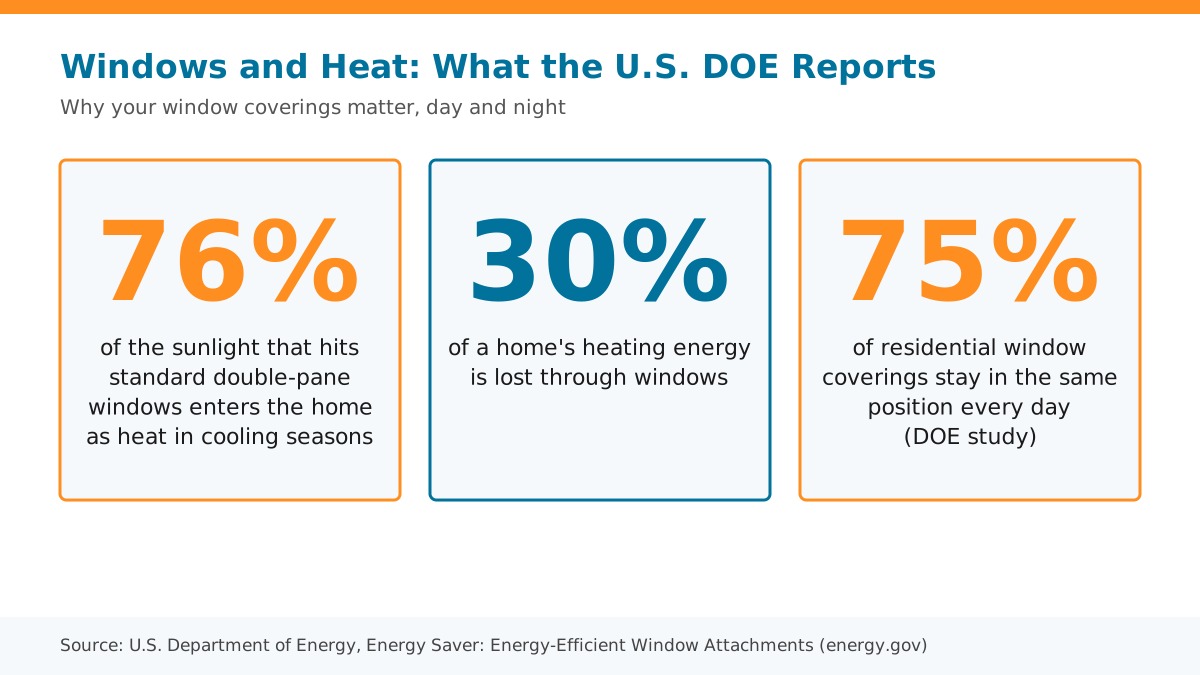
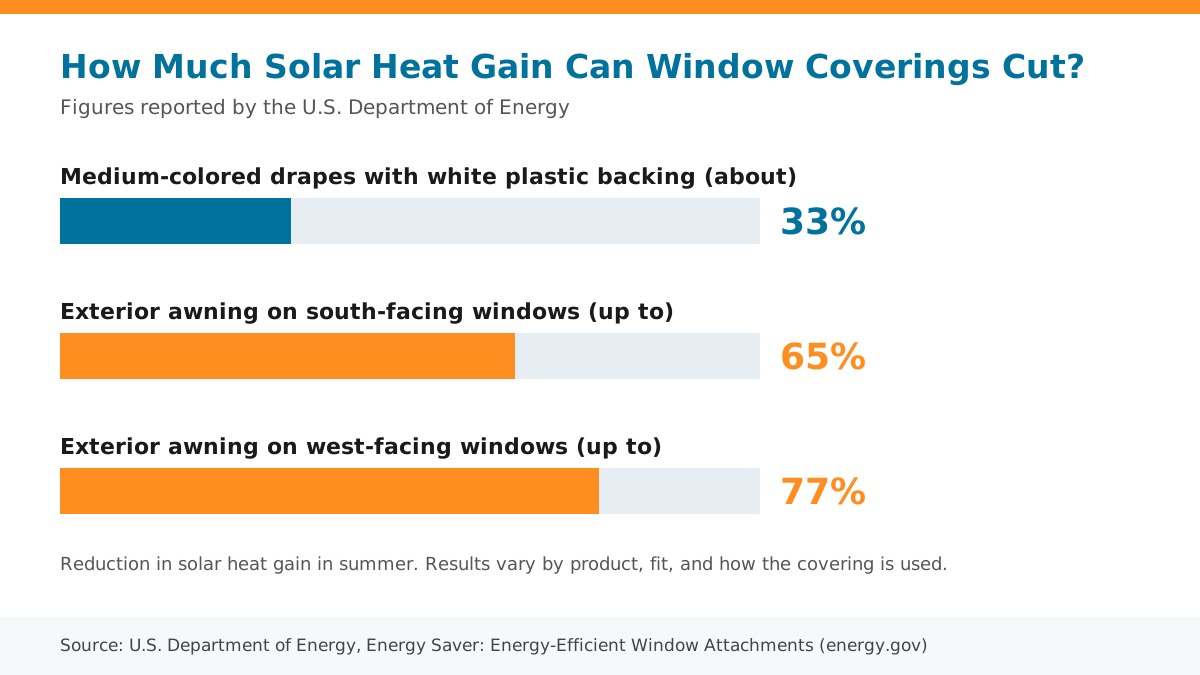
A second layer is not just a privacy fix. Windows are where a lot of a home’s energy goes. The Department of Energy reports that about 30% of a home’s heating energy is lost through windows, and that in cooling seasons about 76% of the sunlight that falls on standard double-pane windows enters the home as heat. In Arizona, that second number is the one that shapes your summer bills.
Your solar shade intercepts sunlight before it warms the room. Your second layer then takes over in the evening, which keeps privacy intact and adds a barrier against heat loss on cooler winter nights. Because the layers cover different hours, they do not compete with each other.
Which Windows Need Layers First
Start with the windows that are both exposed to the sun and visible from the outside. If you are comparing materials and styles for the whole house, the best window coverings for Arizona’s climate are worth a look alongside your layering plan.
West-Facing Living Areas
West windows take the strongest late-afternoon sun, so the solar shade earns its keep there. They are also the rooms you tend to use in the evening, which is when privacy starts to matter.
Street-Facing Bedrooms and Baths
These rooms are lit at night and close to the sidewalk or neighbors. A second layer here gives you privacy on demand without giving up the solar shade’s daytime benefits.
What Layered Window Treatments Cost and How We Plan Them
Cost depends on window size, fabric, the type of second layer, and whether you choose motorization. If you want a sense of ranges before you call, see what custom window treatments typically cost, and if spreading the investment helps, monthly payment options are available.
What Happens During a Free In-Home Measurement
We look at the real windows in your home, not a generic floor plan. During a visit, we typically do the following:
- Measure each window and note its orientation to the sun.
- Check whether the shades you already own can stay in place.
- Confirm mounting depth and wall space for a second layer.
- Walk through options so the evening layer matches the style of the room.
Layered systems are easier to design when every window is measured with the whole room in mind. You can request a free in-home measurement so we can find the right combination for each room.
Serving Mesa, Gilbert, Queen Creek, Florence, and the East Valley
We are a family-owned team serving homeowners across the cities we serve across the East Valley and Pinal County. You can see fabric options in person at our Mesa showroom, and homeowners in the Florence area can start with a phone or online consultation.
Frequently Asked Questions About Solar Shade Privacy
Do solar shades provide privacy during the day?
Yes, for the most part. When it is brighter outside than inside, people outside see very little through the fabric while you keep your view of the yard. A tighter weave, such as 1% or 3% openness, adds to that effect. Standing right at the glass or having a very bright room can reduce it.
Can you see through solar shades at night?
People outside can see in when your lights are on and it is dark outside, and your own view out dims at the same time. With the lights off, much less is visible, though streetlights, television glow, and phone screens can still reveal shapes close to the window.
Which solar shade openness gives the most privacy?
A 1% openness fabric has the tightest weave, so it offers the most privacy and blurs detail the best. Even at 1%, a lit room can show silhouettes and movement after dark, so it works best as a daytime privacy fabric paired with a second layer for evenings.
Is there a shade I can see out of but people can’t see in at night?
No single woven fabric does both after dark. Whichever side is brighter wins, so a lit room is visible from a dark yard. The practical answer is a second layer, such as drapery, a blackout roller shade, or shutters, that you close in the evening and open in the morning.
Can I add a privacy layer to the solar shades I already have?
Often, yes. Drapery works on nearly any window with wall or ceiling space. A second roller shade or blinds depend on mounting depth and frame size. A free in-home measurement settles which option fits each window without replacing the solar shades you already own.
Do solar shades still help with heat if I add drapes or a blackout shade?
Yes. The solar shade does its work during the day by intercepting sunlight, and the second layer takes over after dark. The two cover different hours, so you keep daytime heat and glare control and gain evening privacy.
How often should I open and close my window coverings?
The U.S. Department of Energy reports that about 75% of residential window coverings stay in the same position every day. A simple routine works well: keep sun-facing coverings closed through the hot part of the day, then close your privacy layer at dusk. Motorized shades can handle the schedule for you.
What Homeowners Are Saying
“Ryan did an excellent job measuring and installing our sun screens. His knowledge of the SRP rebate program made it easy to submit the necessary paperwork and documentation. Ryan’s efficiency and knowledge were greatly appreciated. Thank you for your great customer service!”
Tom Jensen
“Ryan did a wonderful job on our sunscreens. Fair price, good workmanship, no fuss, no muss. He knows his products too. I would highly recommend this business. The way it should be!!”
Monte Passmore
“We chose this company because they’re a family-owned Pinal County business with great reviews, and they absolutely did not disappoint. Ryan was professional, honest, and showed a lot of integrity throughout the entire process. The work was done very well, communication was great, and we’re extremely happy we chose them. Highly recommend!”
Morgan Theriault
Keep the View by Day and Get Privacy at Night
Solar shades are still one of the smartest ways to handle Arizona sun, and their nighttime limit is simply a reason to complete the system. Pair them with drapery, a second roller shade, shutters, or a motorized layer, and your windows work around the clock. To talk through your rooms with our team at Colby Window Solutions, send us a message and we will take it from there.